In Defense of Hot Coffee On A Hot Summer’s Day
For a long time now – I’m talking hundreds and hundreds of years – coffee houses have reigned supreme as the social space for critical discussion and the swapping of revolutionary ideas. Ironically, the following revolutionary idea was revealed to me on what could perhaps be considered the modern equivalent, for better or worse: TikTok.
One afternoon, lost in the doomscroll, I saw a video from user @azucarbyannie. Speaking into a propped-up phone camera, her words animated by aesthetically-pleasing pop-up images, Annie begs, and then answers the question: Why is cold coffee so common in the United States, and so rare everywhere else?
“The shift from drinking your coffee hot to drinking it cold is a direct reflection of the American capitalist system,” Annie says. “We’re incentivized to not only drink our energy, but drink it at a fast pace and drink it while we’re doing other things.”
I’ll be transparent: this hurt my feelings.
I don’t drink iced coffee because it’s trendy, or because capitalism forces me to! I told myself contemptuously, scoffing, ever the contrarian. I drink it because I like it that way. Duh.
Laid out plainly, though, it becomes hard to ignore the societal factors leading me here. Singular and unique in my own ways I may be, but existing in a cultural vacuum I do not.
Why do I prefer iced coffee year-round, even through the most brutal of Midwestern winters? Conversely, why, in some of the hottest countries around the world, is hot coffee still so preferred?
“In cultures that normalize drinking hot coffee, coffee is more about rest, relaxation, and leisure,” Annie on TikTok continues.
Rest, relaxation, leisure: not famously at the top of the list of American ideals.
Drinking coffee “the American way” reflects our own economical system and priorities. Cold coffees, such as iced lattes, are quicker and easier to make, and are ready for sipping the second the beverage changes hands from barista to customer. Coffee is consumed on-the-go, not at all uncommon in morning business meetings or lecture halls, signalling: Hey, I’m up, I’m productive, let’s get to work. This attitude towards coffee as a necessary fuel for working class Americans is practically a given – culminating in the near-ubiquity of the (oft-ironic) saying, “Don’t talk to me before I’ve had my coffee.”
Coffee cultures across the world similarly reflect their own cultural values. In European cafes, for instance, patio seating often faces the street, providing ample opportunities for people watching. Coffee-drinking is an hours-long process, alongside friends or maybe a good book, enjoying the drink as it cools and its taste profile evolves.
Another popular TikTok trend involves Americans trying to recreate this “Euro cafe” experience. Such videos involve opting to take one’s coffee and pastry outside to the tables in front of their local coffee shop, only to reveal the relative letdown that is their own view, usually a painfully-suburban parking lot, a busy intersection somewhere in the background – more symbols of American work culture, in which working class citizens live in packed suburbs and clog the highways during rush hour. Amidst the fast pace of daily American life, it’s easy to get caught up, and rush your daily rituals, too — I know I do.
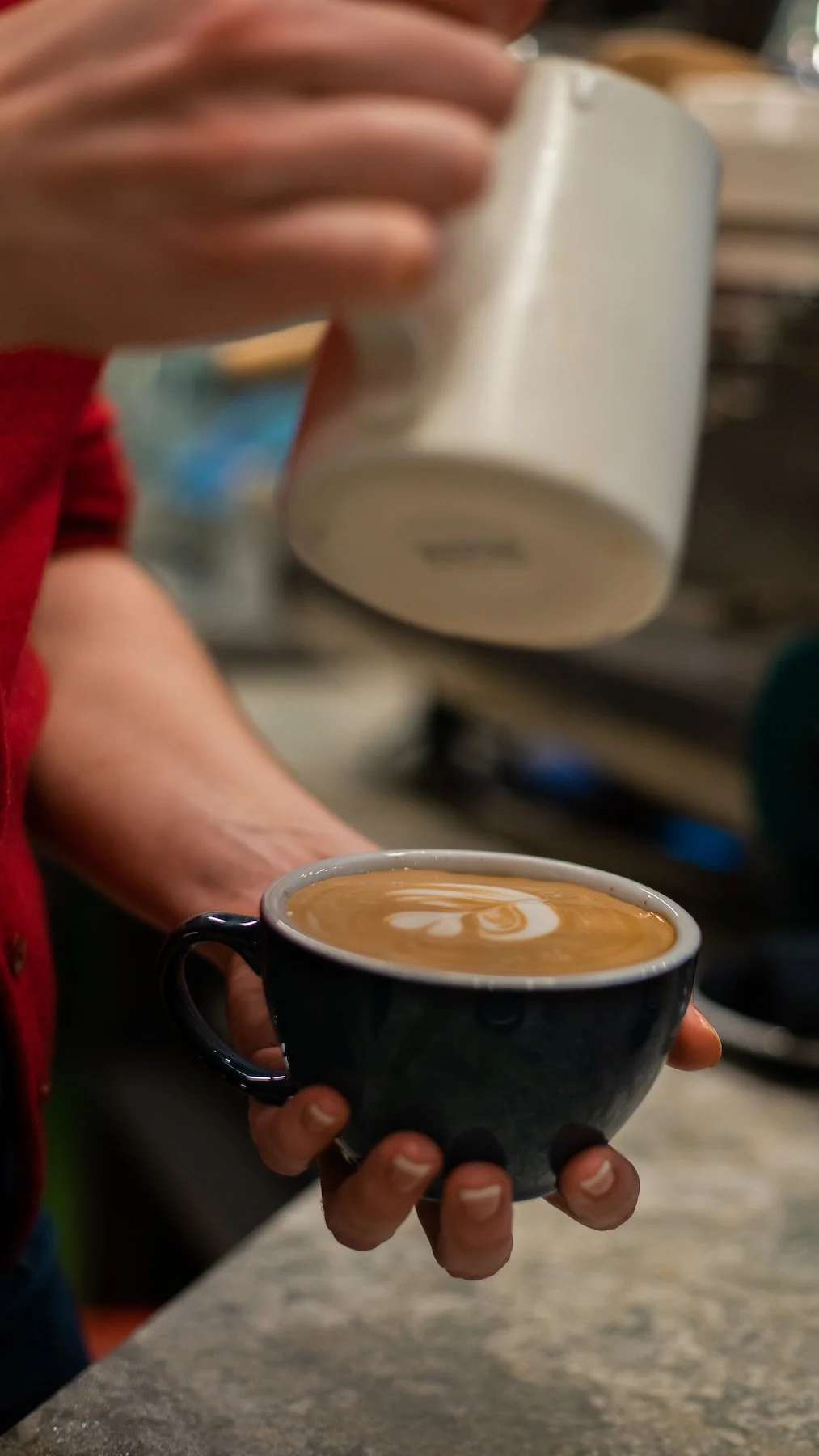
It wasn’t always like this for me. I remember my very first foray into specialty coffee took place far too early, back in middle school, a planned endeavor alongside a friend. We had seen on Instagram these grown-up drinks prepared in some mystical fashion by people cooler than us, wiser than us, who knew somehow the way to pour art into ceramic mugs, warm milk arranging itself into the shapes of flowers, leaves, animals. We had seen these things and wanted them for ourselves.
Together with her mom, our chaperone, we approached the counter at Blackdog Coffeehouse in Shawnee Mission, KS, and asked the barista to make us two of their finest “drinks with the art on top”.
At one time, this was all I knew of coffee. Then it was drip coffee, and even a couple of pourovers – left black for authenticity’s sake, which clashed horrifically with my too-young, fast food-aligned palette. Back to 12oz vanilla lattes I went (the ones with the art on top).
The common denominator of all of these experiments in becoming a Very Mature Adult Coffee Drinker is that all of the beverages I was trying were prepared hot. This was the way my parents drank it, the way I saw it on TV, on social media. The way coffee has been for some time – again, hundreds and hundreds. I’m not sure when things shifted, only that I didn’t question it, and hadn’t questioned it until I came across that one specific video.
Here we are in the United States, several waves of coffee under our belts, boasting a wide variety of carefully-honed techniques and clever gadgets to produce some of the most technically sophisticated coffee drinks in all the long history of coffee preparation. Yet, in this same United States, we have strayed far from the original, simple two-ingredient drink in numerous ways. We’ve added ice cubes, and then milk, and then more milk, and then we’ve expanded the definition of “milk” – we’ve added sweeteners and syrups and sauces, cold foam and protein additions and frappe powder and more, more, always more.
Are those things bad? No, certainly not. Movies also aren’t bad, even though they’re newer, and require less intellectual engagement than something like reading. Even TikToks aren’t always bad – after all, it was a TikTok that introduced me to the discussion I engage in here. It’s important, however, in a culture that moves so fast and burns so bright at both ends of the candle, not to forget the original intentions of a thing once we’ve optimized it.
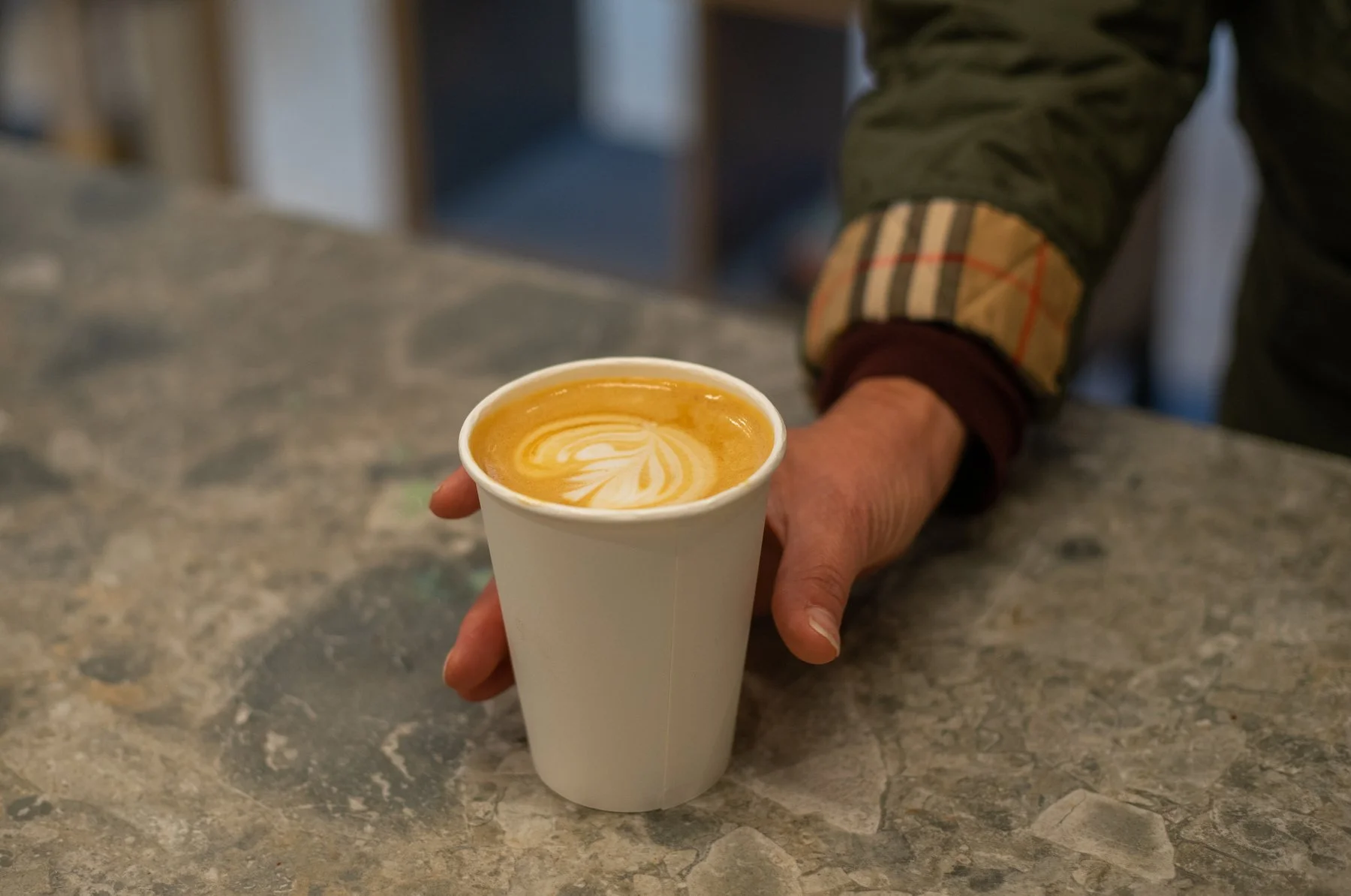
Coffee is a slow process. Farming takes years, and Arabica coffee, the premiere choice for specialty coffee beans, have a much smaller yield size compared to the Robusta you’ll find in your average cup of Folgers. Freshly prepared, it burns your lips, your tongue. If not carefully tended in preparation, milk separates from foam and the integrity of espresso cremas become compromised. Though you can technically assemble a cappuccino in a Keurig machine, it is fundamentally unlike the real thing. These things matter.
It matters, also, to mention that this rise of the supremacy of iced coffee drinks reflects the prominence of American hustle culture, but doesn’t necessarily prescribe it. It’s true what I said earlier, that coffee houses have always been seen as places for collaboration and discourse, and this is still true. Coffee shops are often the choice setting for poetry readings (Check out the events page on our website to see what we’ve got going on here at necessary®, while you’re here!), book clubs, and meetings of the mind, from catch-ups to job interviews to community meetings. For something like a Euro cafe experience, we’ve got outdoor seating at our Printer’s Row location, and a parklet area in Logan Square.
So, I still like cold coffee. That hasn’t changed and probably won’t. I love oat milk iced lattes and cold brews and I won’t be ashamed of that. There are other drinks, though, that I want to prioritize again, because while American culture may not always tend towards the slow life, I certainly do. Drinks like pourovers, cortados, and flat whites just aren’t something you can (typically) do iced, but they’re all great alternatives to more widely popular drinks that are often prepared cold, like lattes. The heat outside might typically lend itself to opting for cooler bevs, but the rest of the world is asking us, is that really the only way?
If you’re interested in going back to basics with your coffee drinks, we at necessary & sufficient® use thoughtfully and ethically sourced Arabica beans from Olympia Coffee Roasters to craft each drink – alongside homemade syrups and carefully-selected milk options, if those things are your vibe. We also offer classes on proper pourover preparation – one of my favorite ways to drink coffee hot - as well as a variety of barista techniques! We’d love it if you decided to switch it up this summer and try out one of these drinks the way we’re so proud to prepare it. You might even end up with a new favorite.
