Art – And Coffee – Connects Us
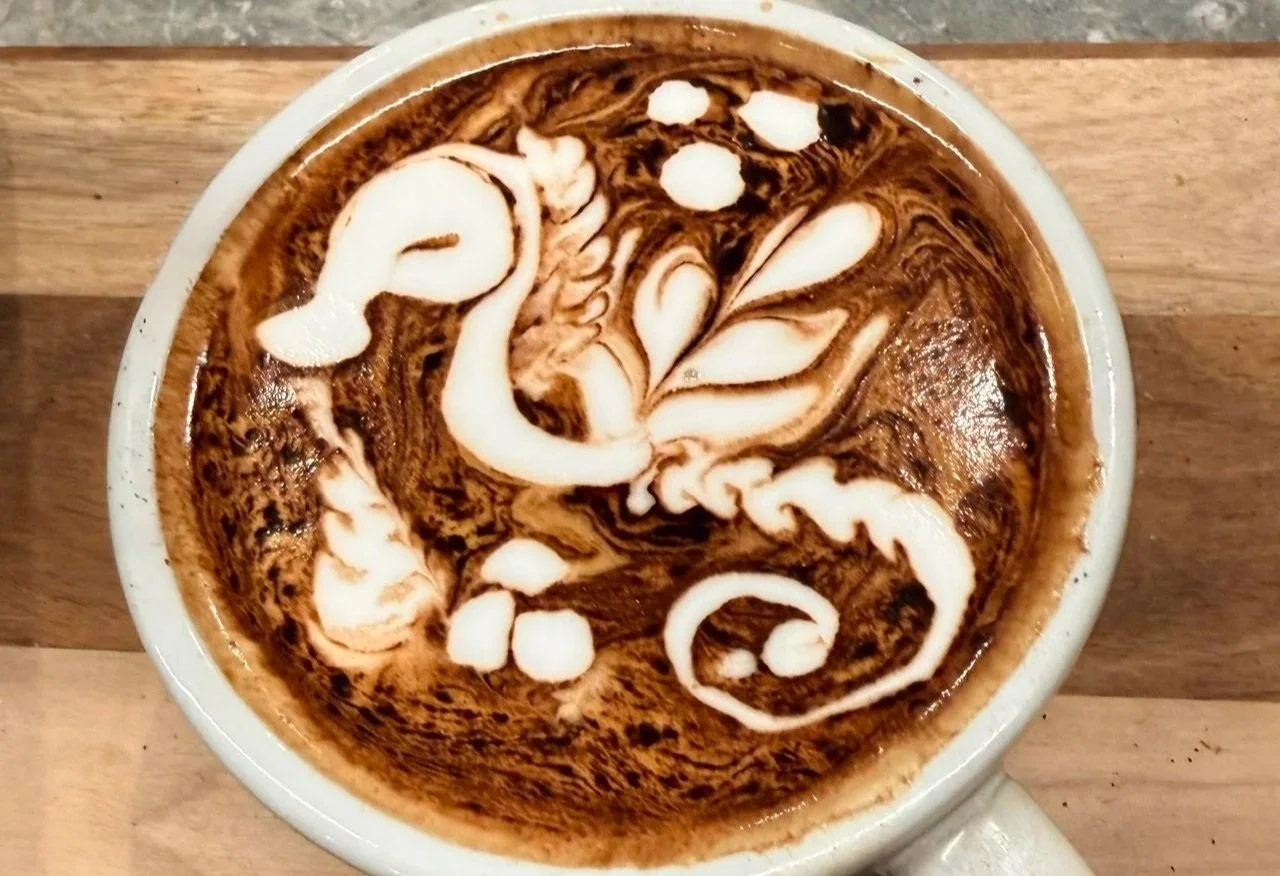
Lead Barista practicing her seahorse latte art, looks pretty great to me!
Some say coffee is an art, some a science – if you were to ask me, which I’m not saying that you are, I say varying perspectives on the matter are all charmingly worth considering. Kate Vrijmoet, celebrated artist and owner of necessary & sufficient coffee, nudges this concept further: here at necessary, the cafe itself exists as a living, changing piece of art.
“In our social terms, the cafe is a business. What do you mean, it’s a work of art? It doesn’t make any sense,” says Vrijmoet. “But it is: the whole cafe is placemaking. It’s relational aesthetics.”
The term was popularized in the 90s by Nicolas Bourriaud in a book by the same name. Relational aesthetics is social art, with the audience themselves acting as the vessel for creating meaning. It's a different kind of art piece: always changing, unpredictable, and fleeting. Once the people are gone, the art is, too. The idea of relational aesthetics thrived in the art world long before Bourriaud published his formal examination of the practice. In the 70s, Vrijmoet says, these installations were called happenings.
In one particular happening, at the Seattle Erotic Festival, Vrijmoet enlisted volunteers to sit in a public space and have their hair touched. “Participants would play with their hair and rub their scalp, and that was the art practice, you know?” Vrijmoet says.
Another time, Vrijmoet engineered a piece called the Yellow Leaf in which a tattoo artist publicly designed and administered a tattoo of the artists’ choosing, in a location of their choosing, on a volunteer. Afterwards, the tattoo itself was auctioned off, providing a commentary – still highly relevant today – on the commodification of art.
“Once I got into art and social change in relational aesthetics, I could understand that the happenings we were doing were more like social sculptures, which evolved into placemaking as art, which evolved into the cafe.”
In 2018, Vrijmoet polled Logan Square residents on the sorts of spaces they felt were missing from their community. It speaks to the significance of coffee shops as third spaces that this option was the overwhelming preference.“It ties into the tradition of coffee shops as places for community connection, which overlaps with the concept of art as connection,” says Vrijmoet.
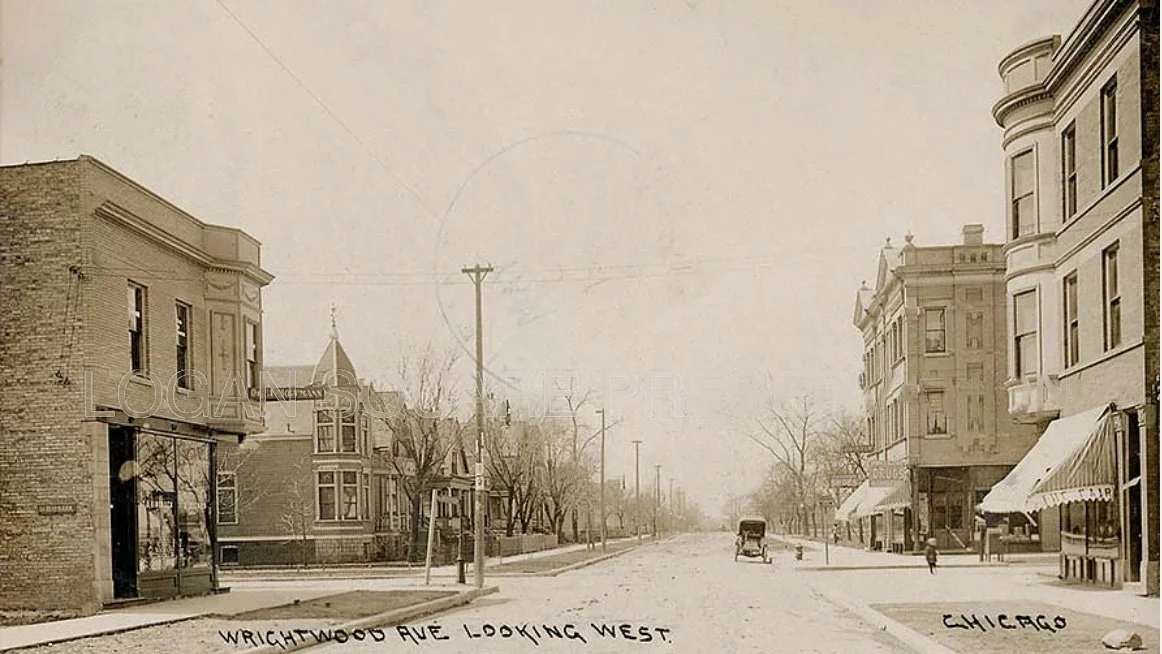
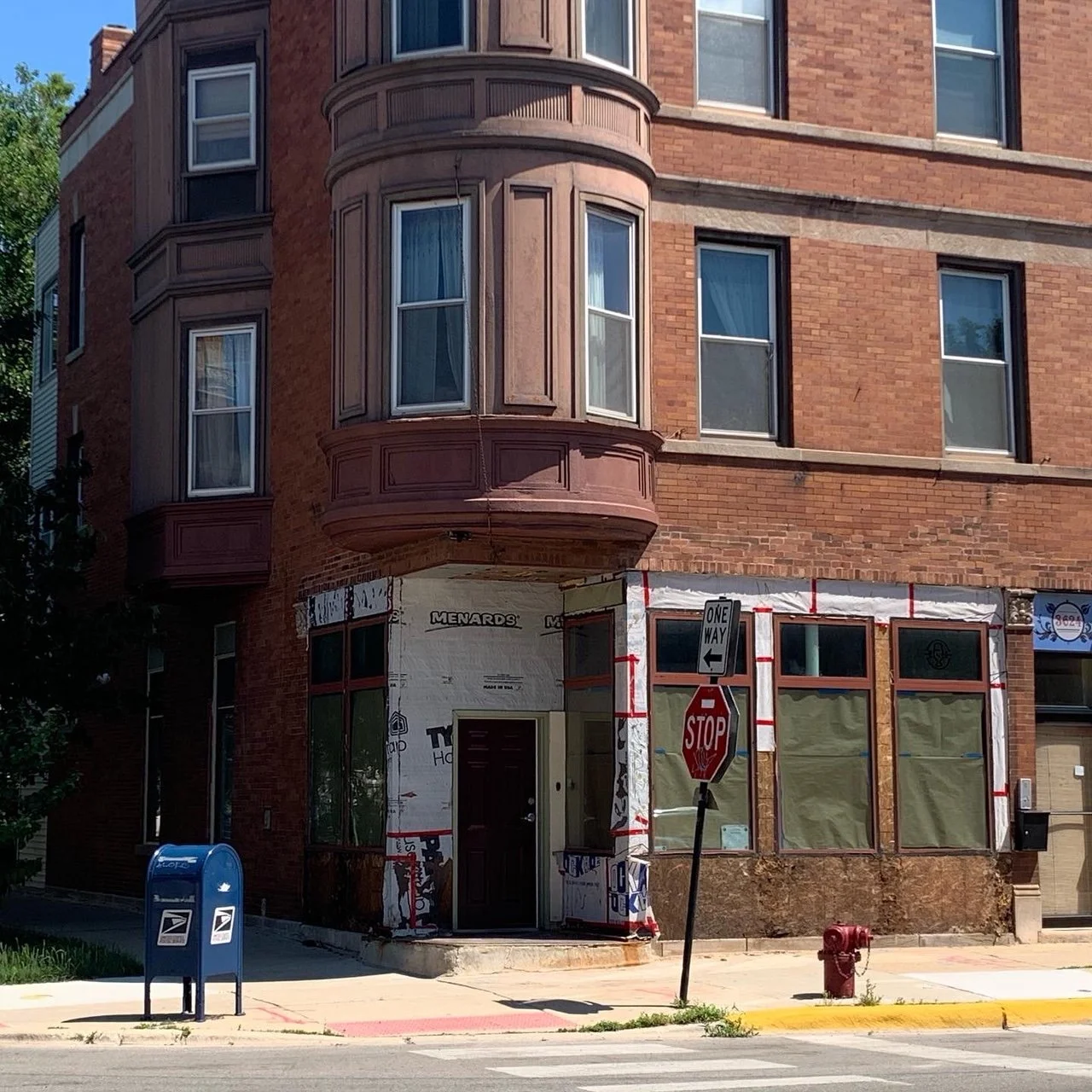
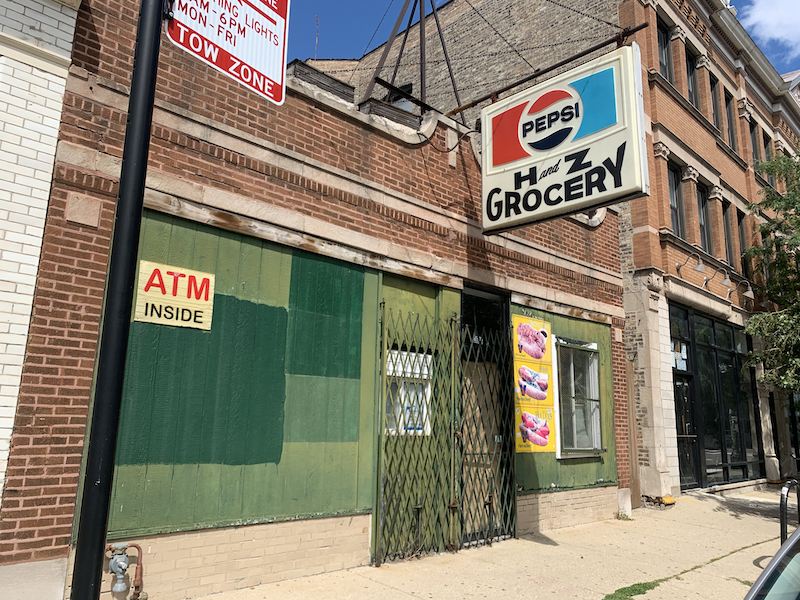
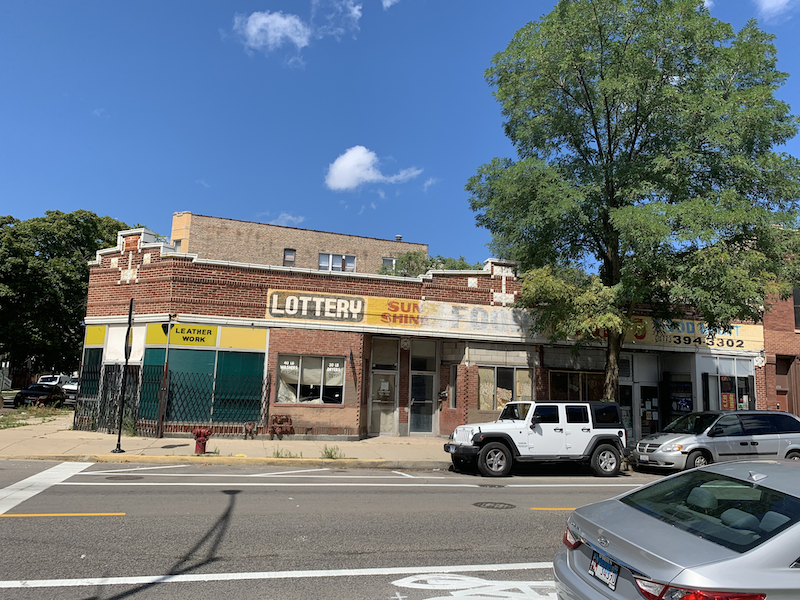
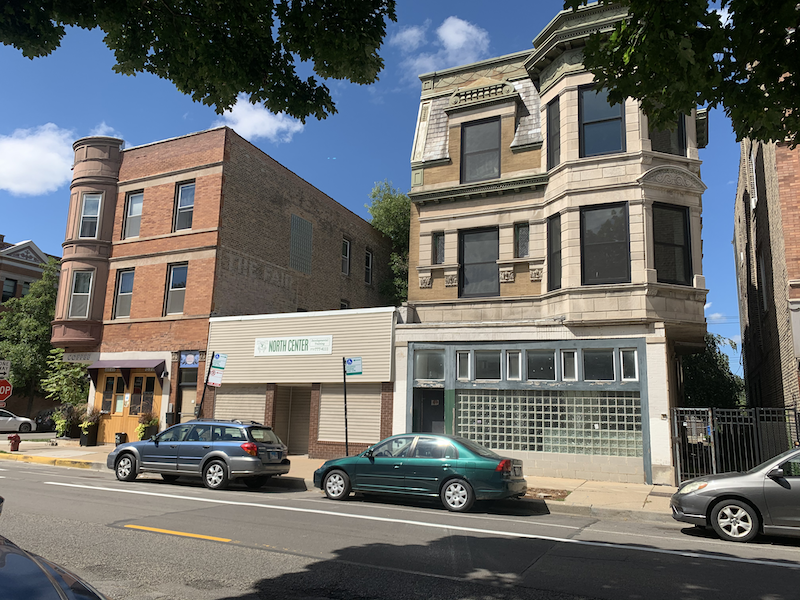
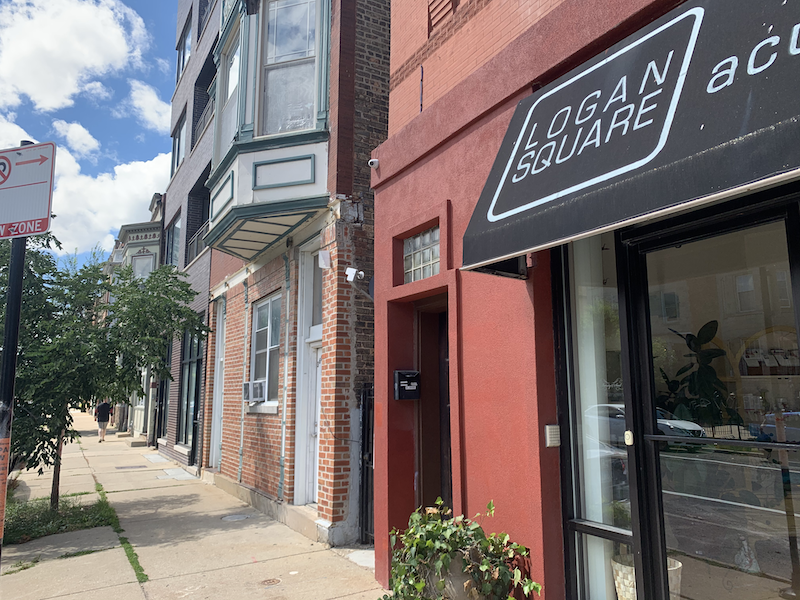
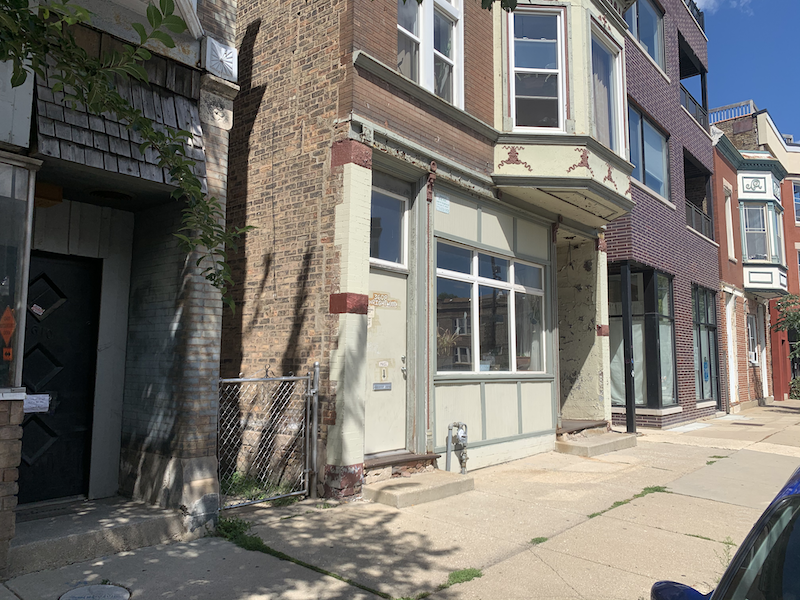
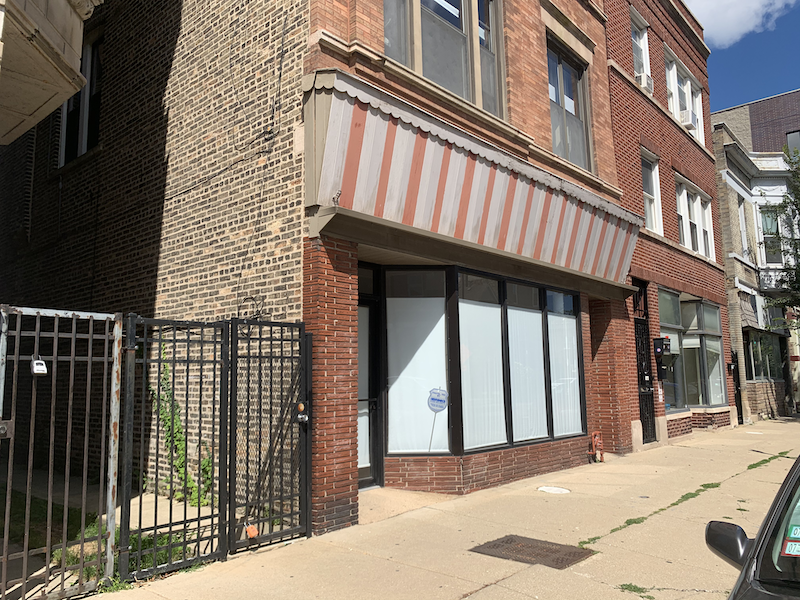
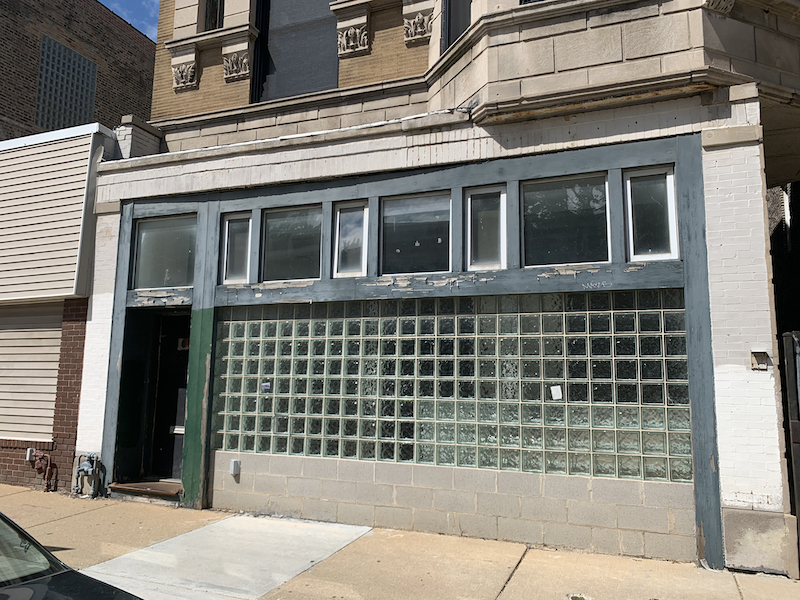
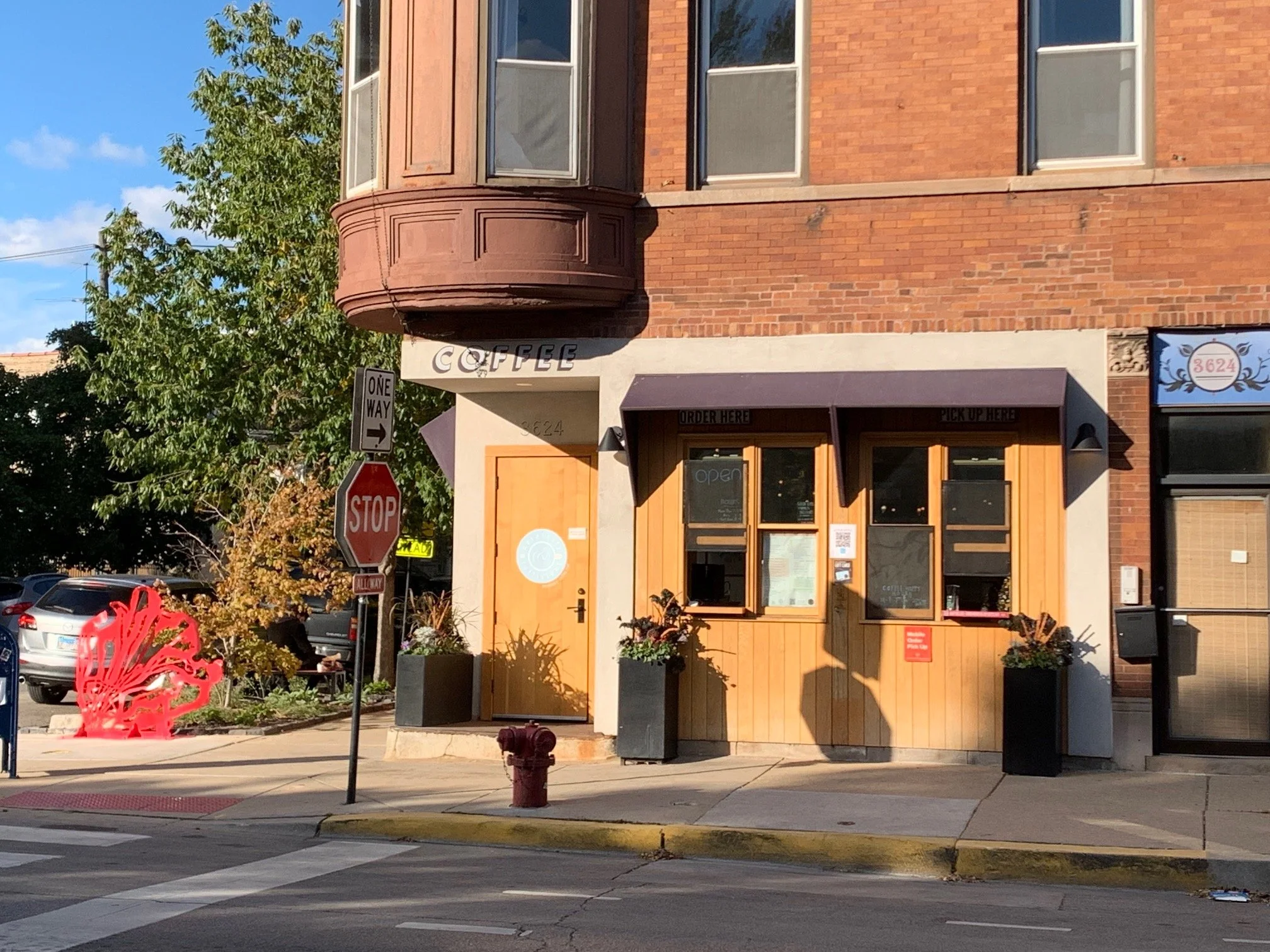
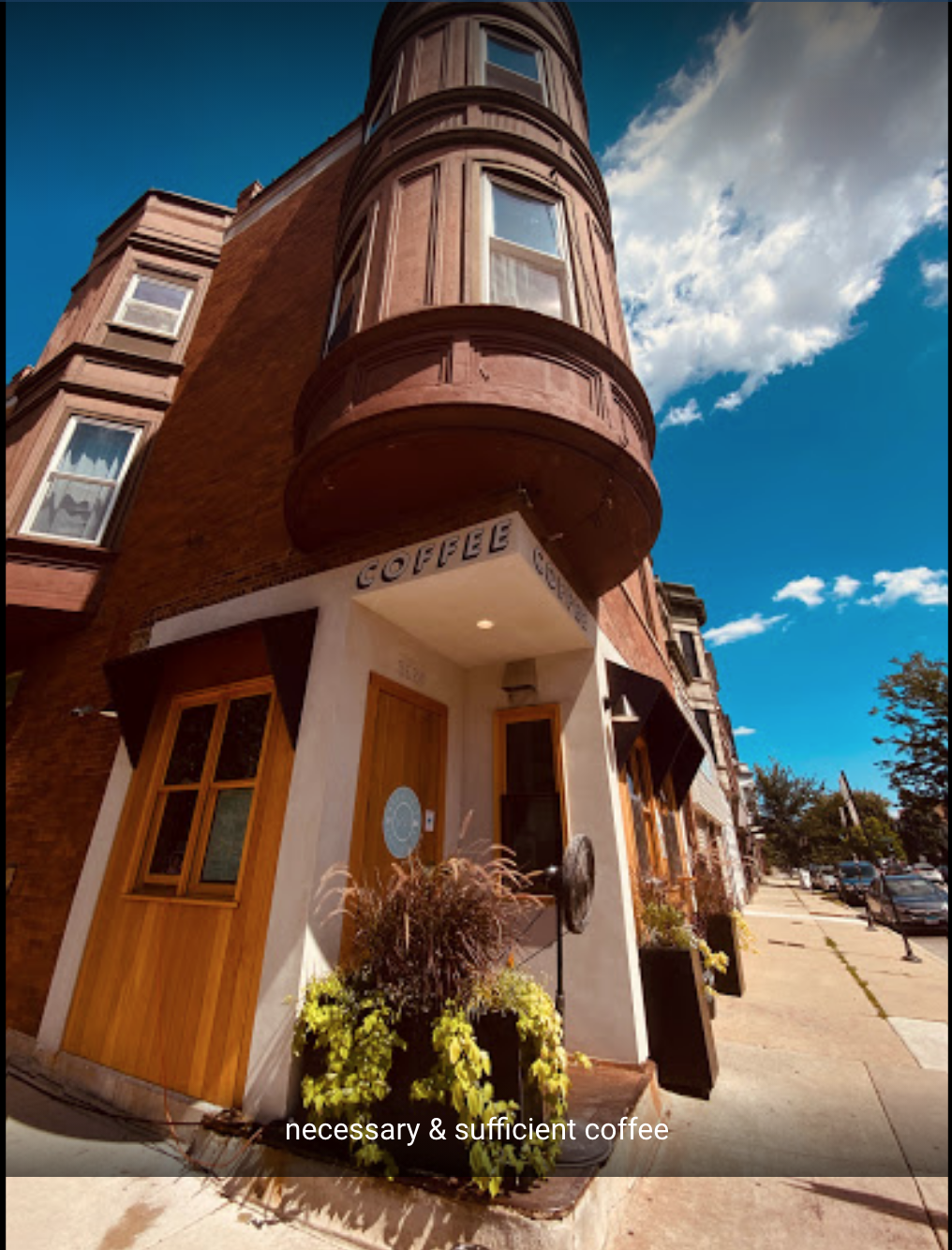
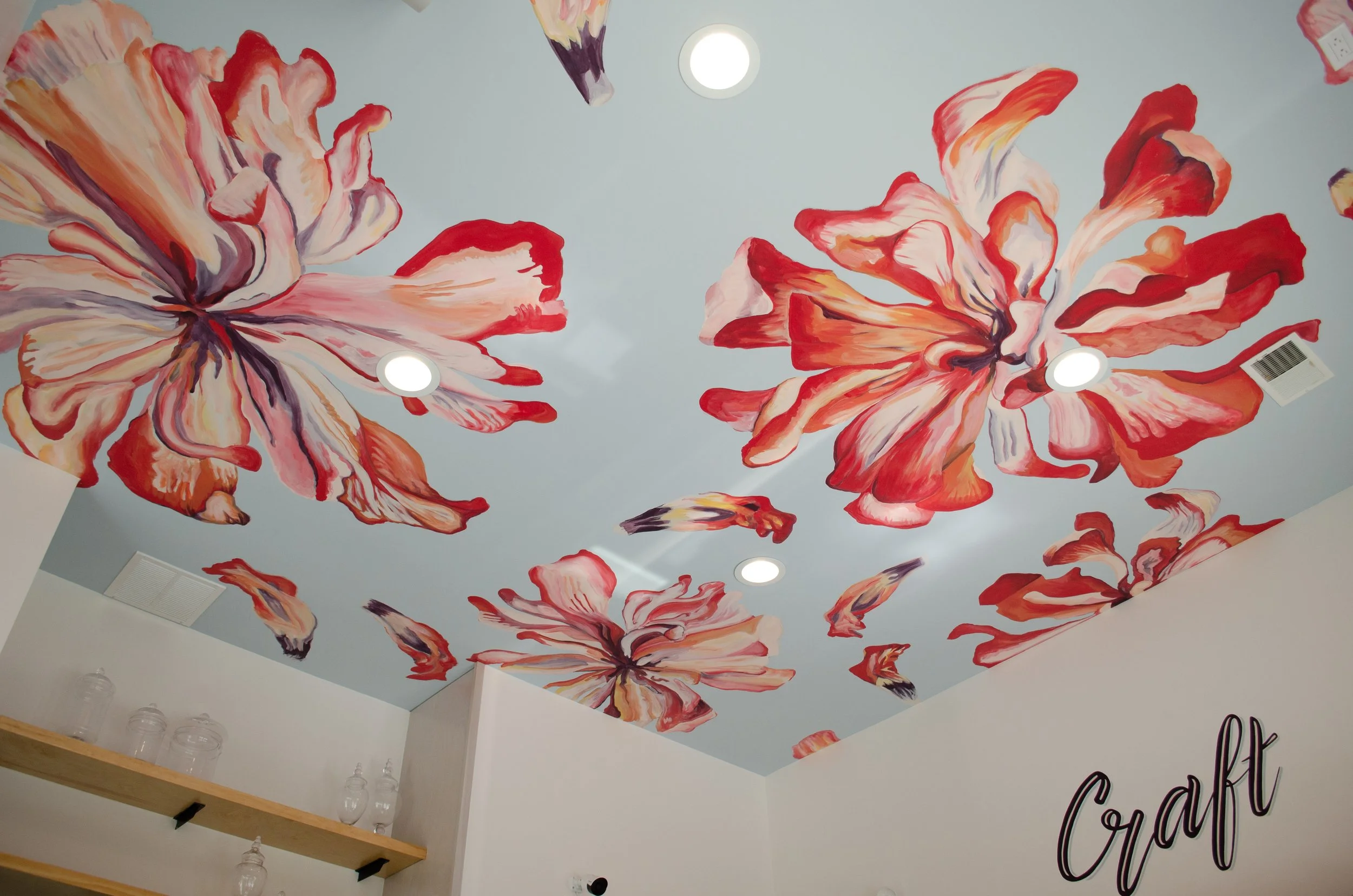
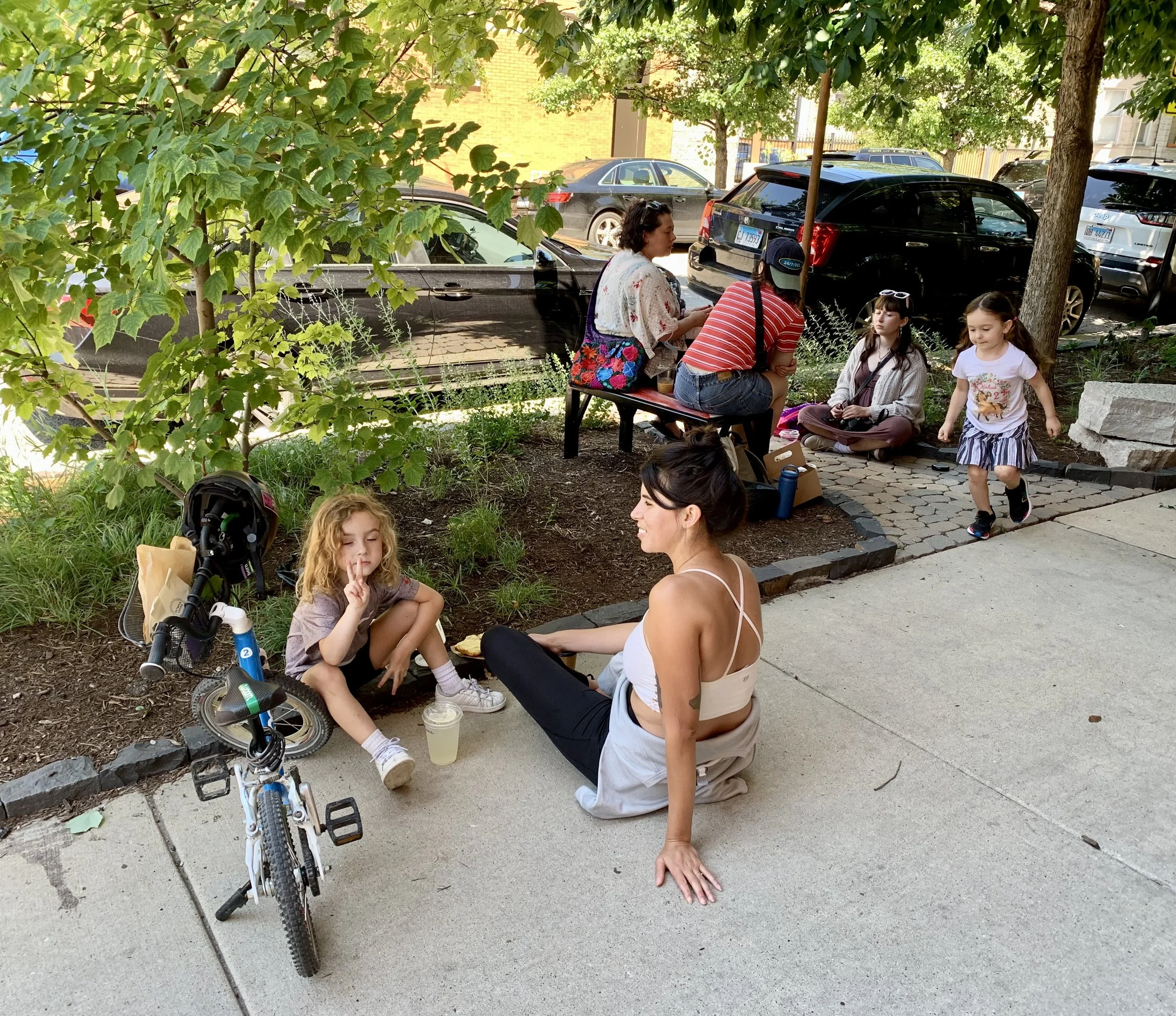
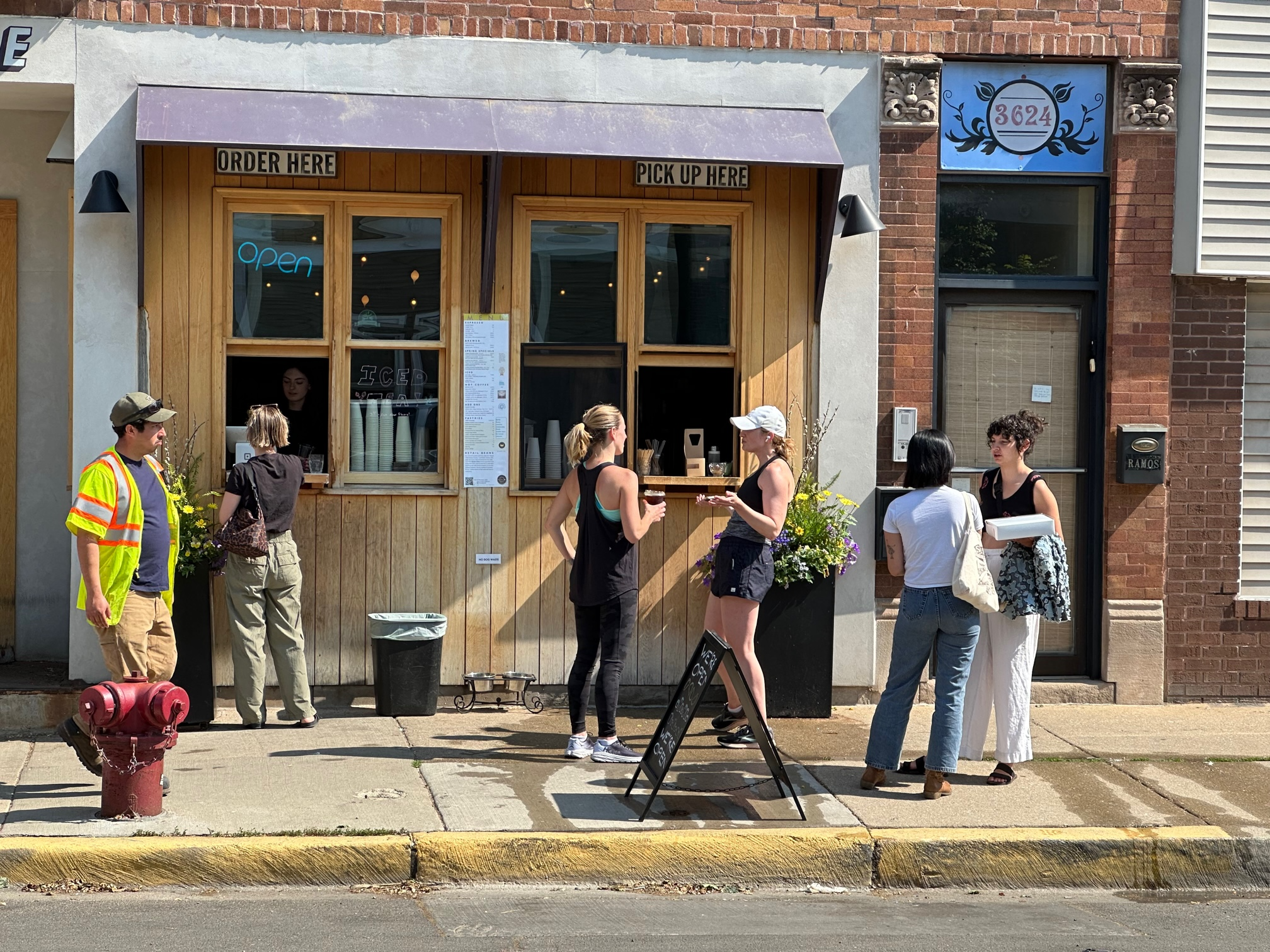
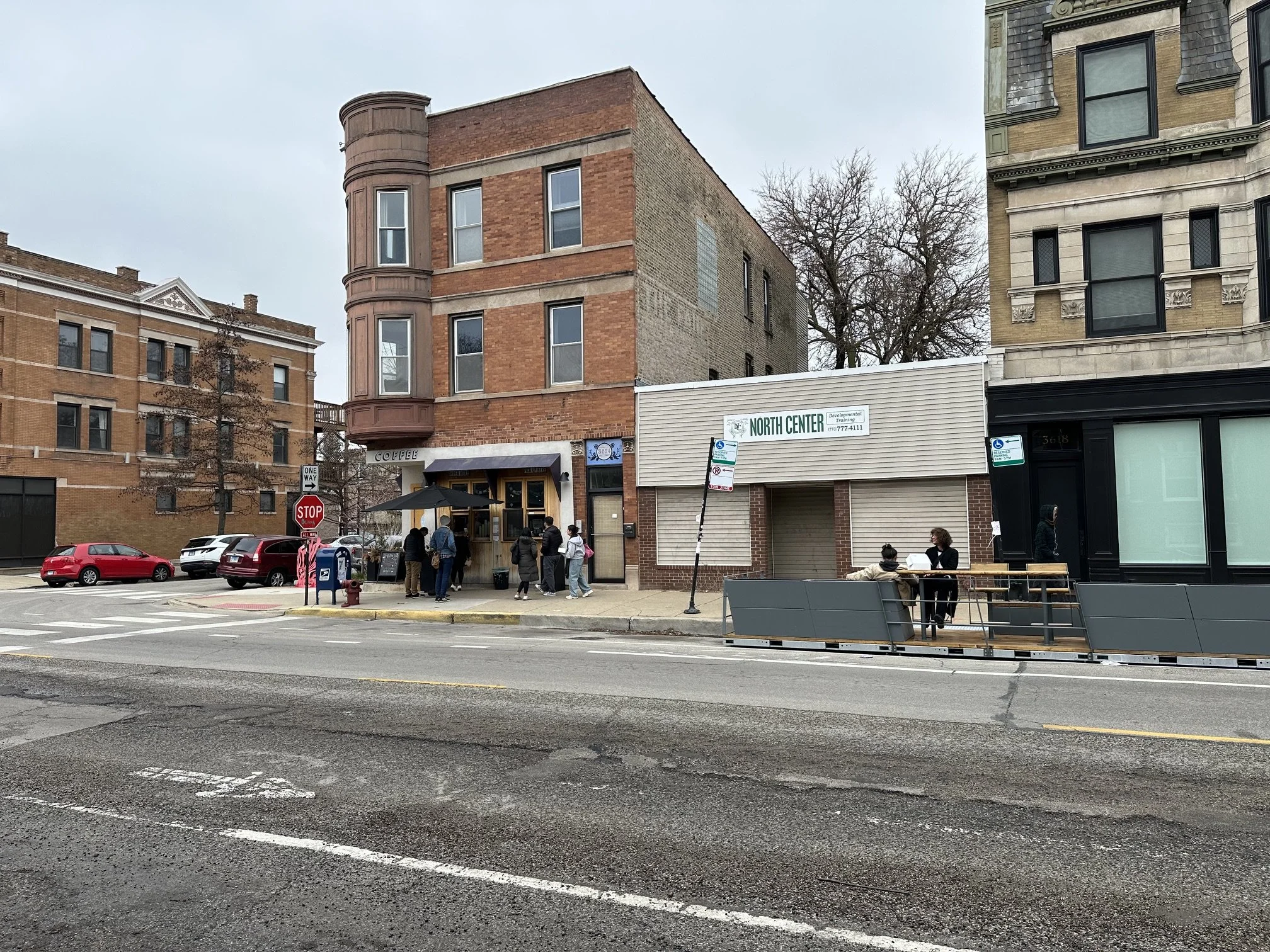
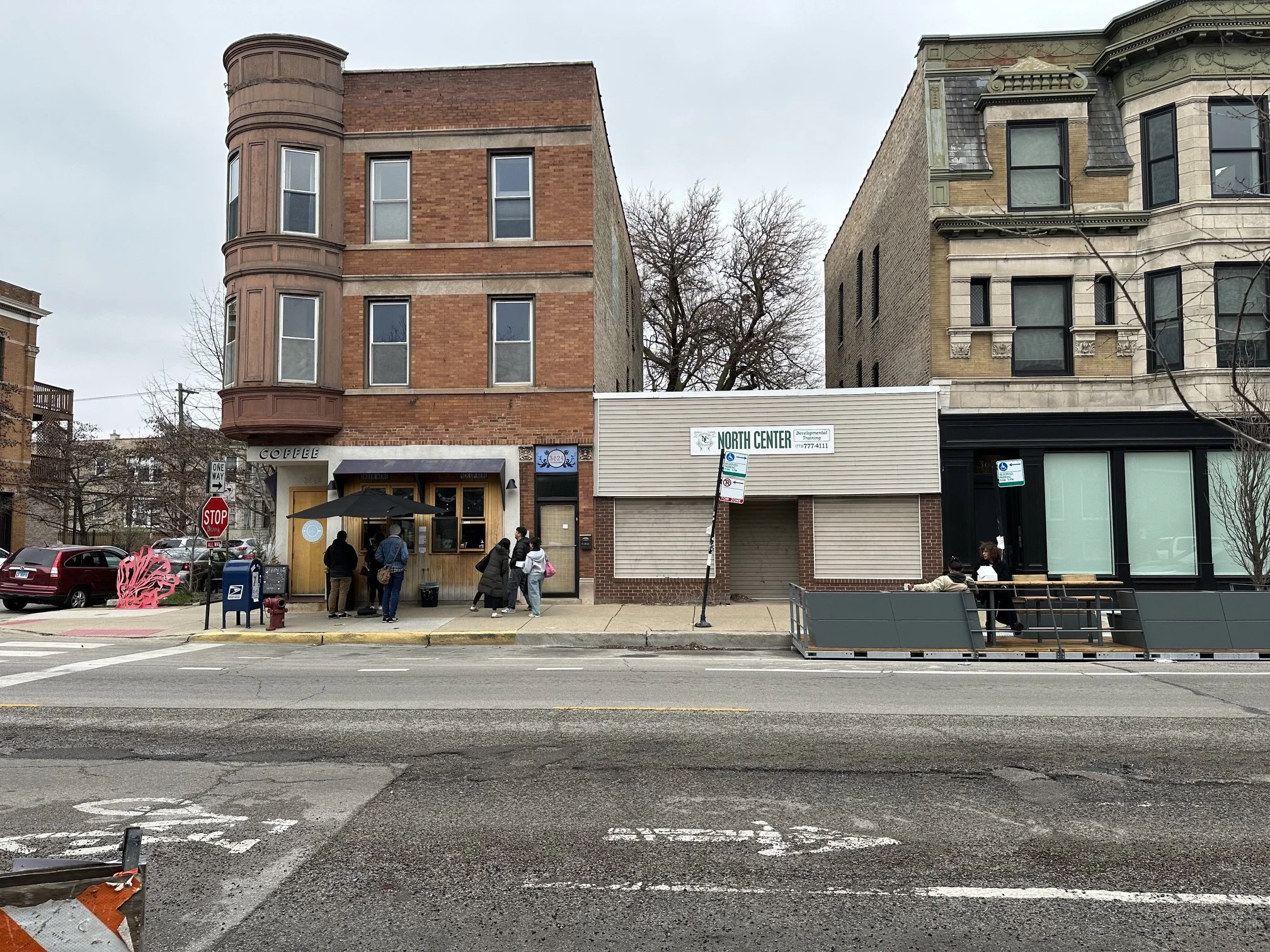
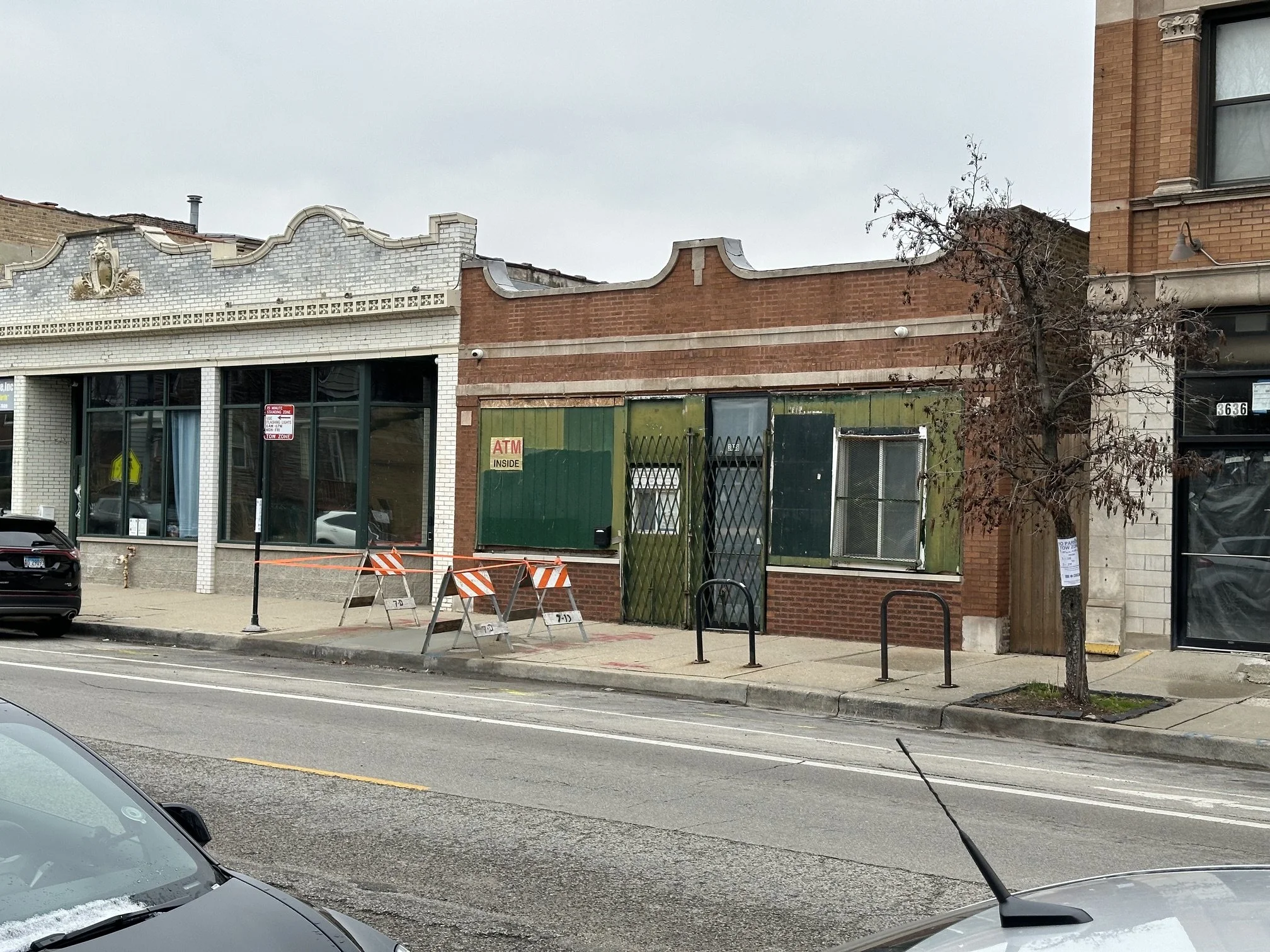
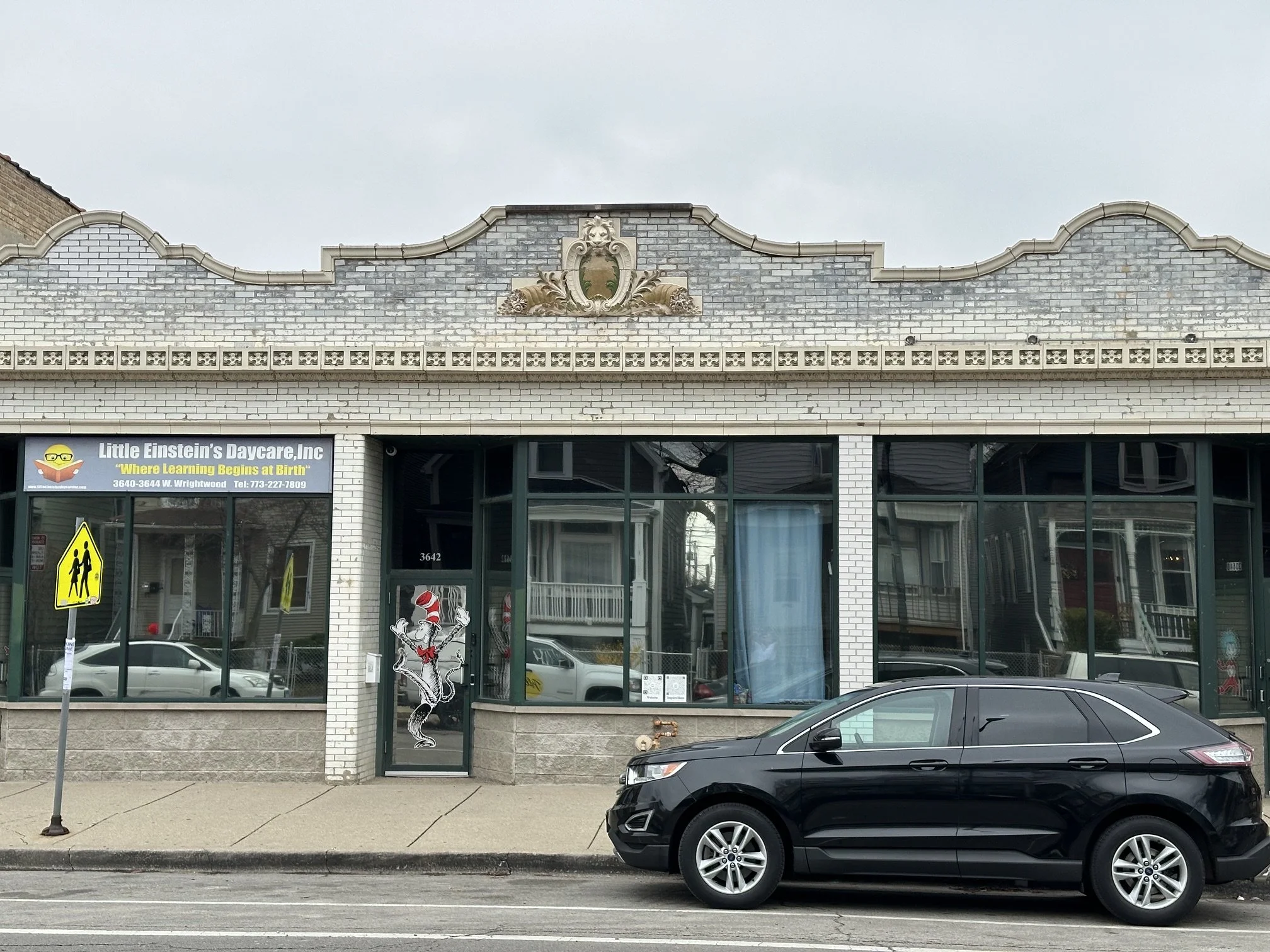
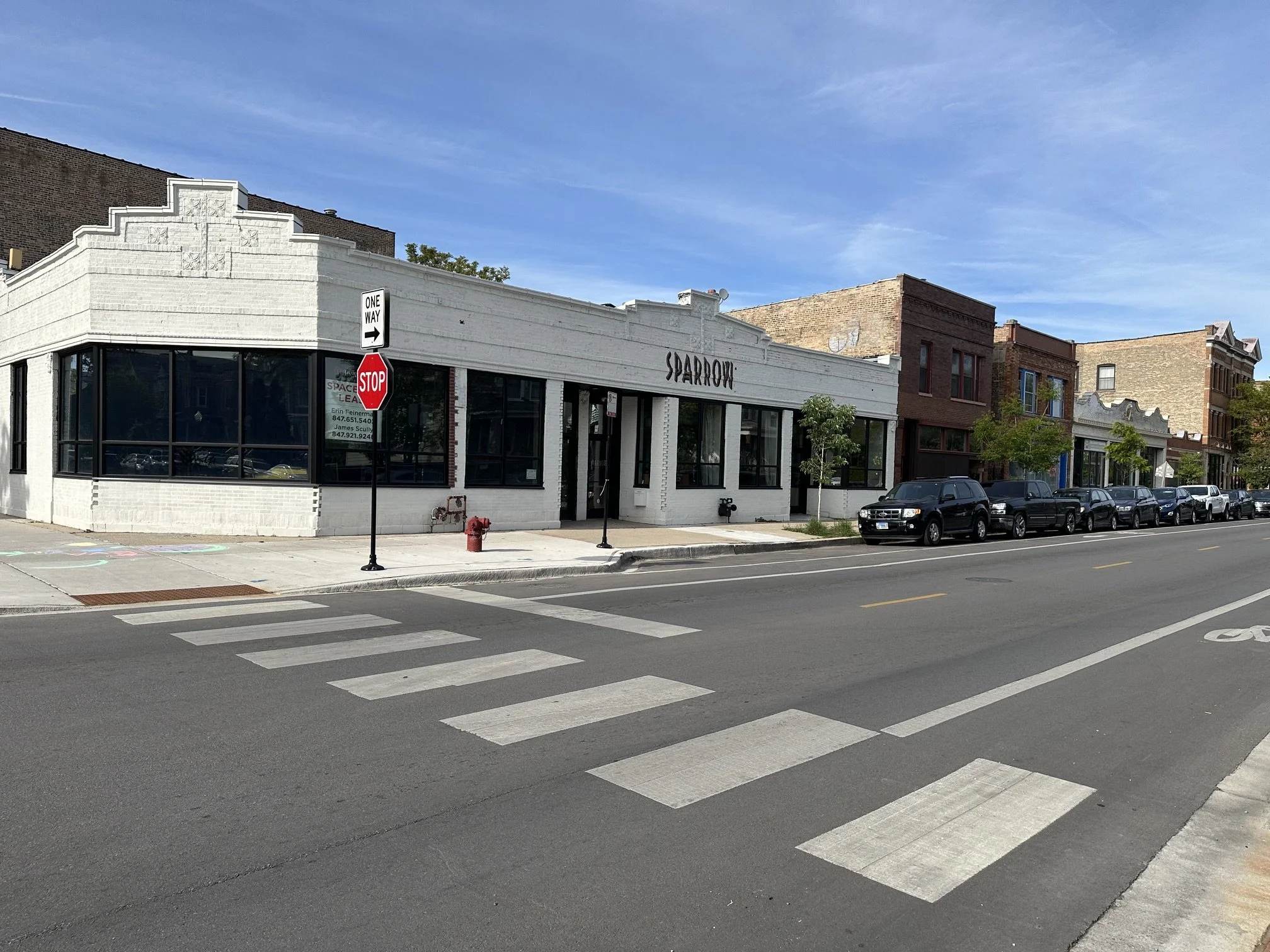
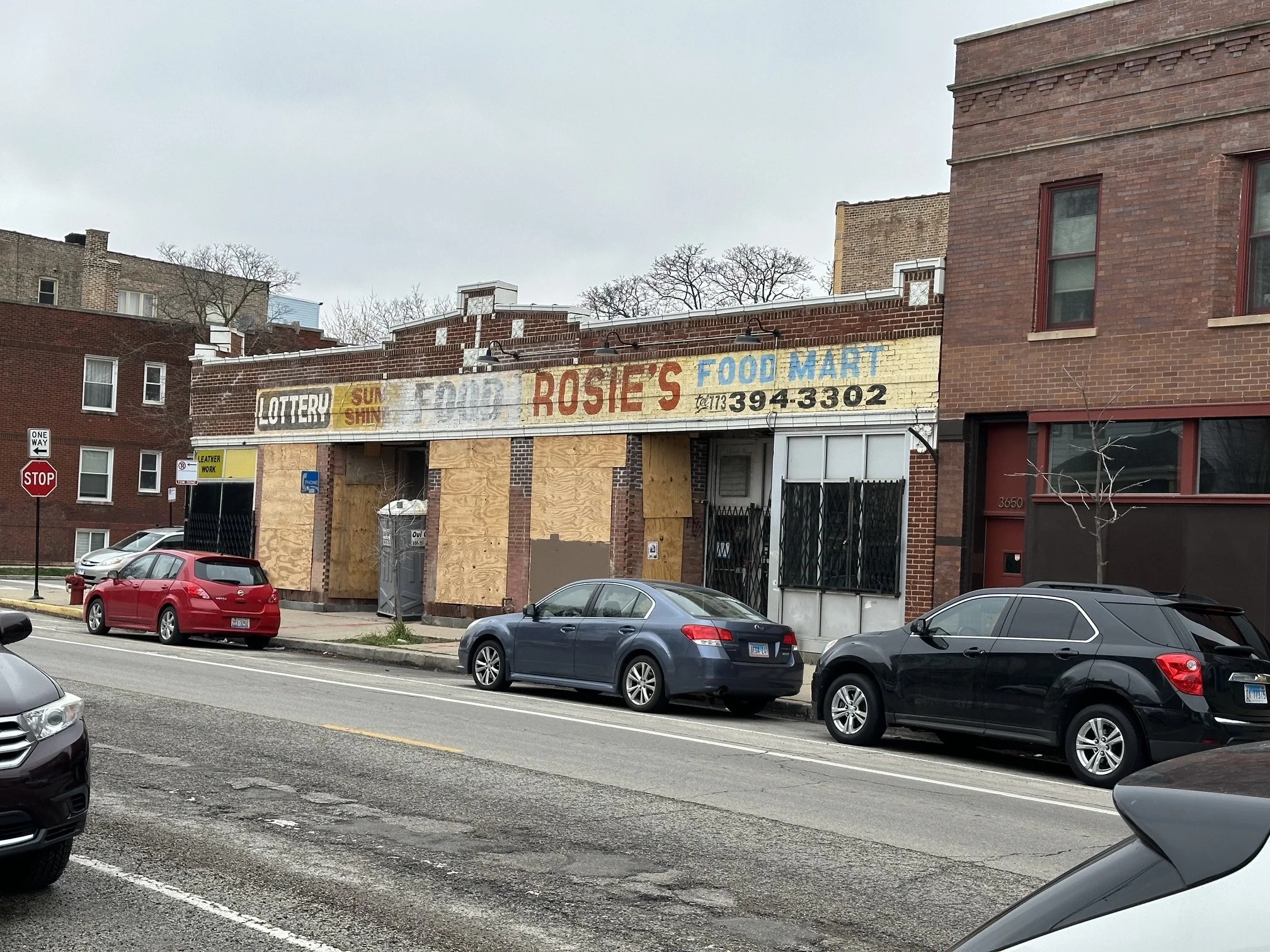
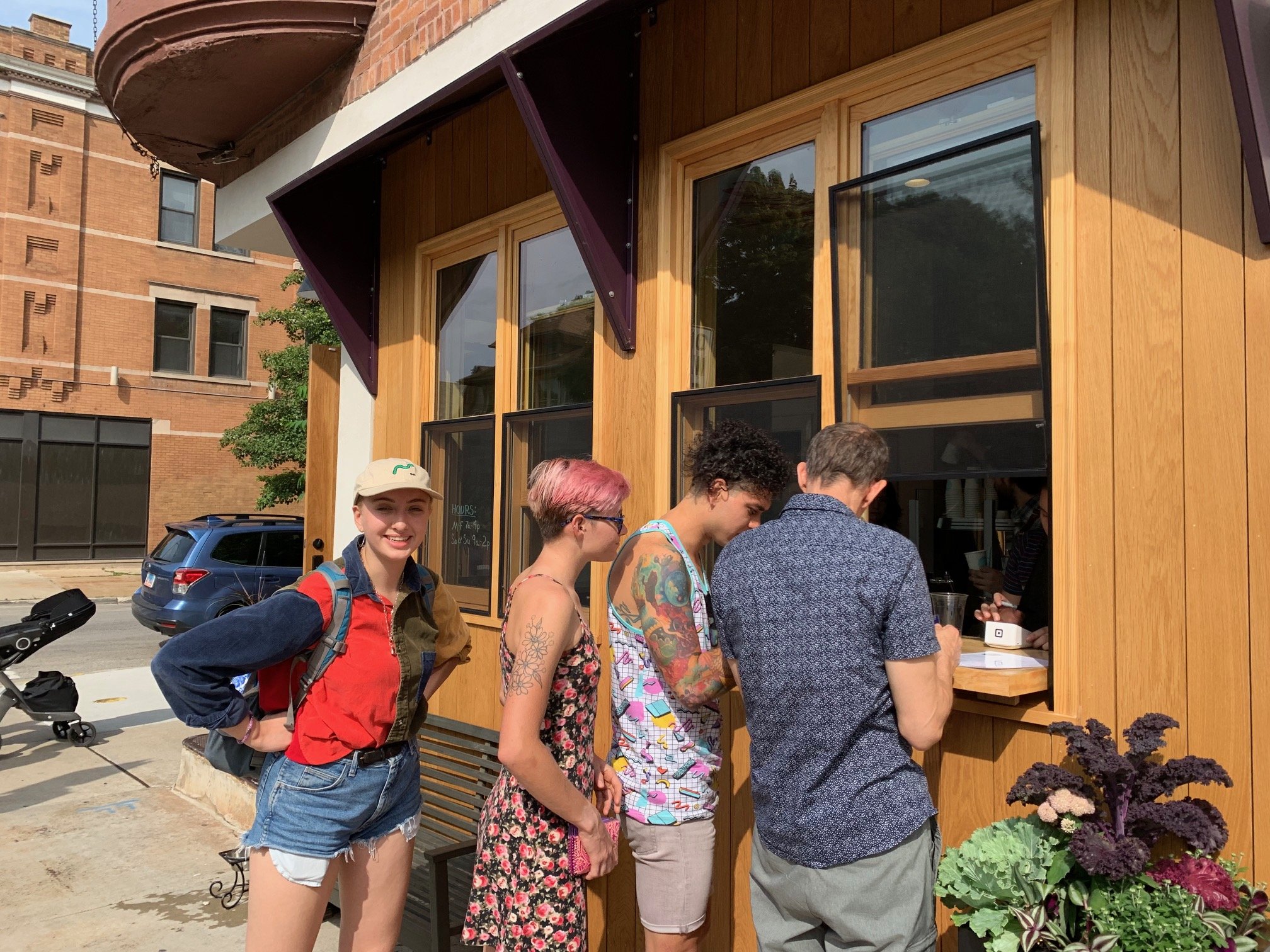
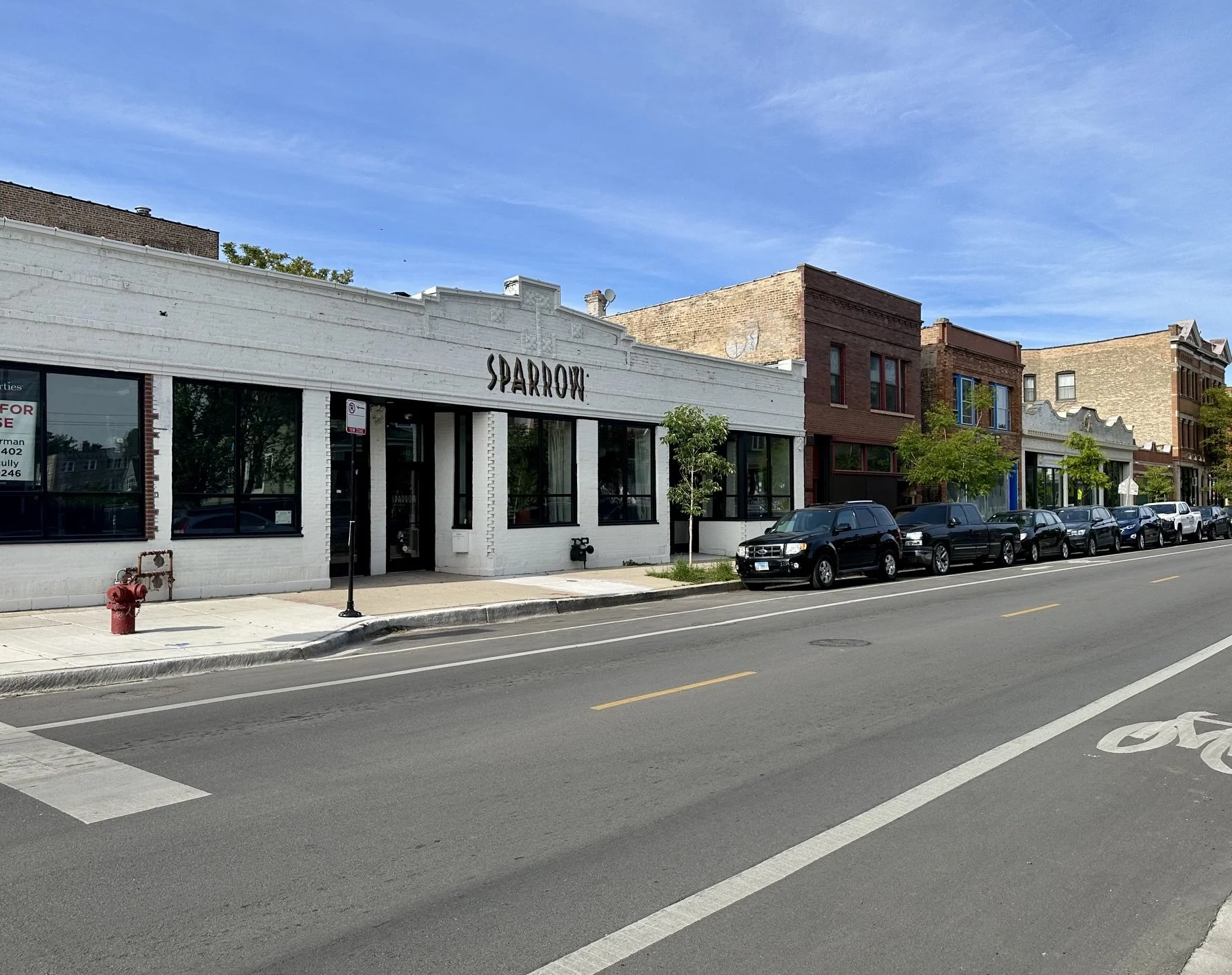
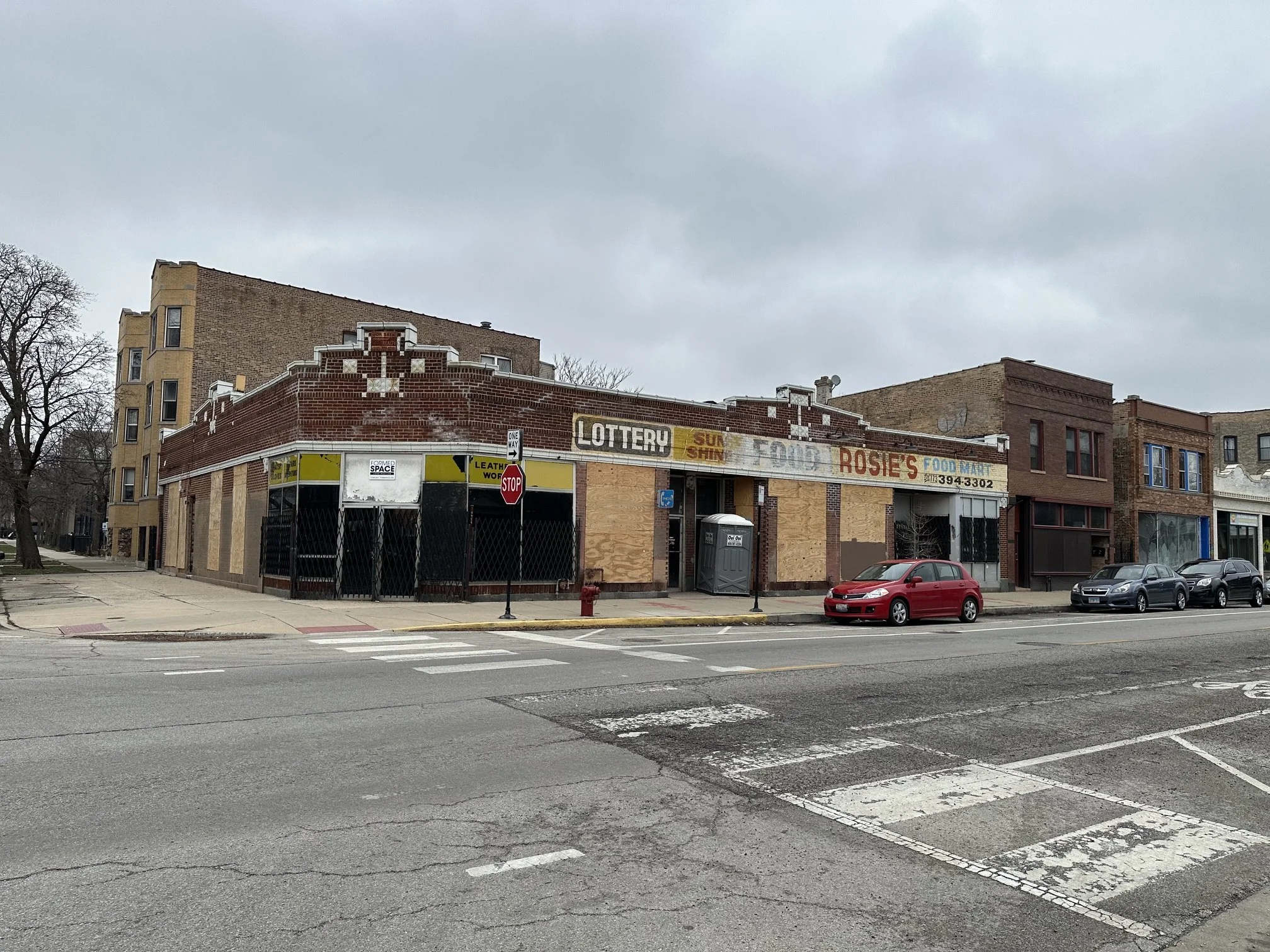
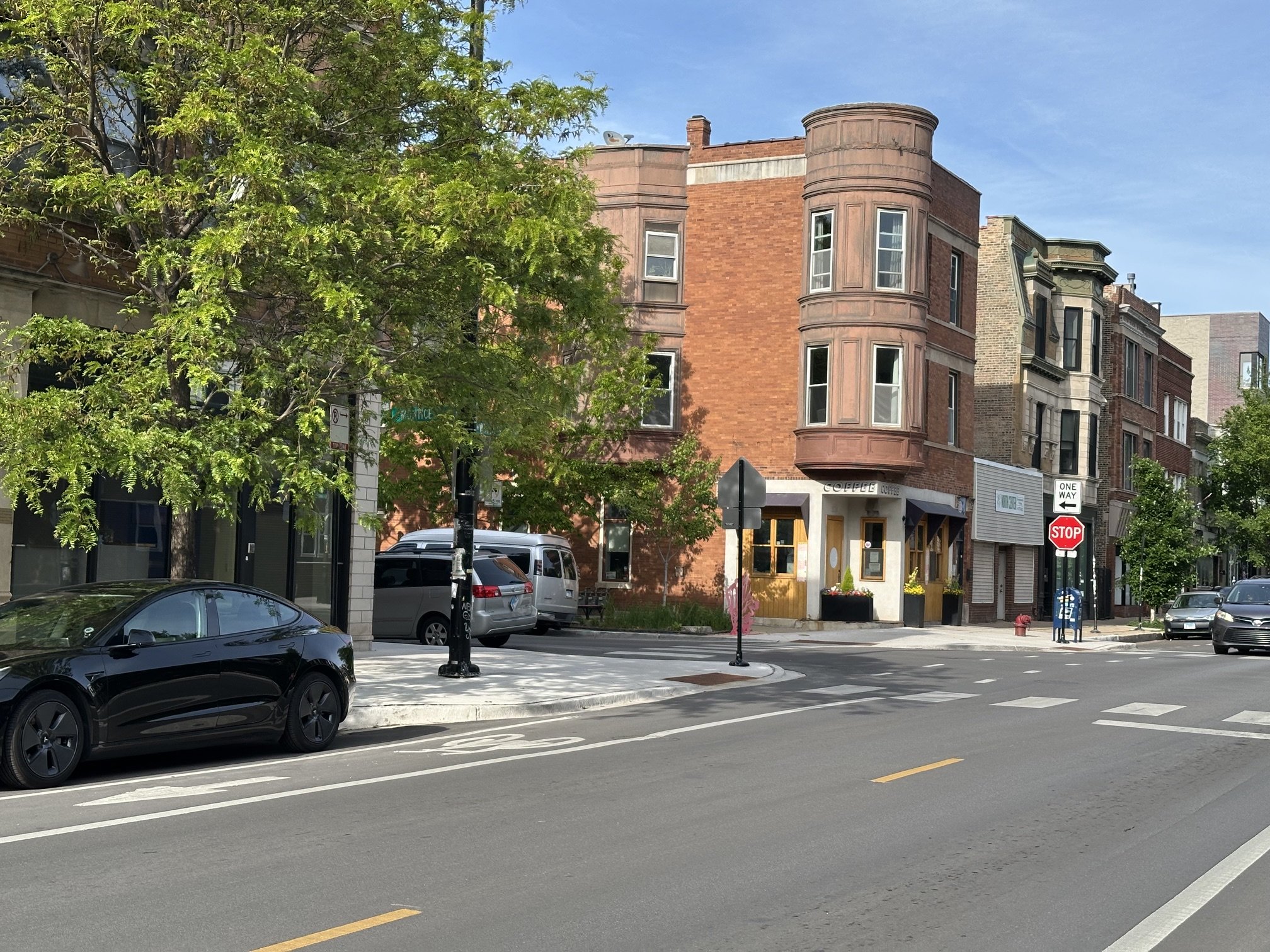
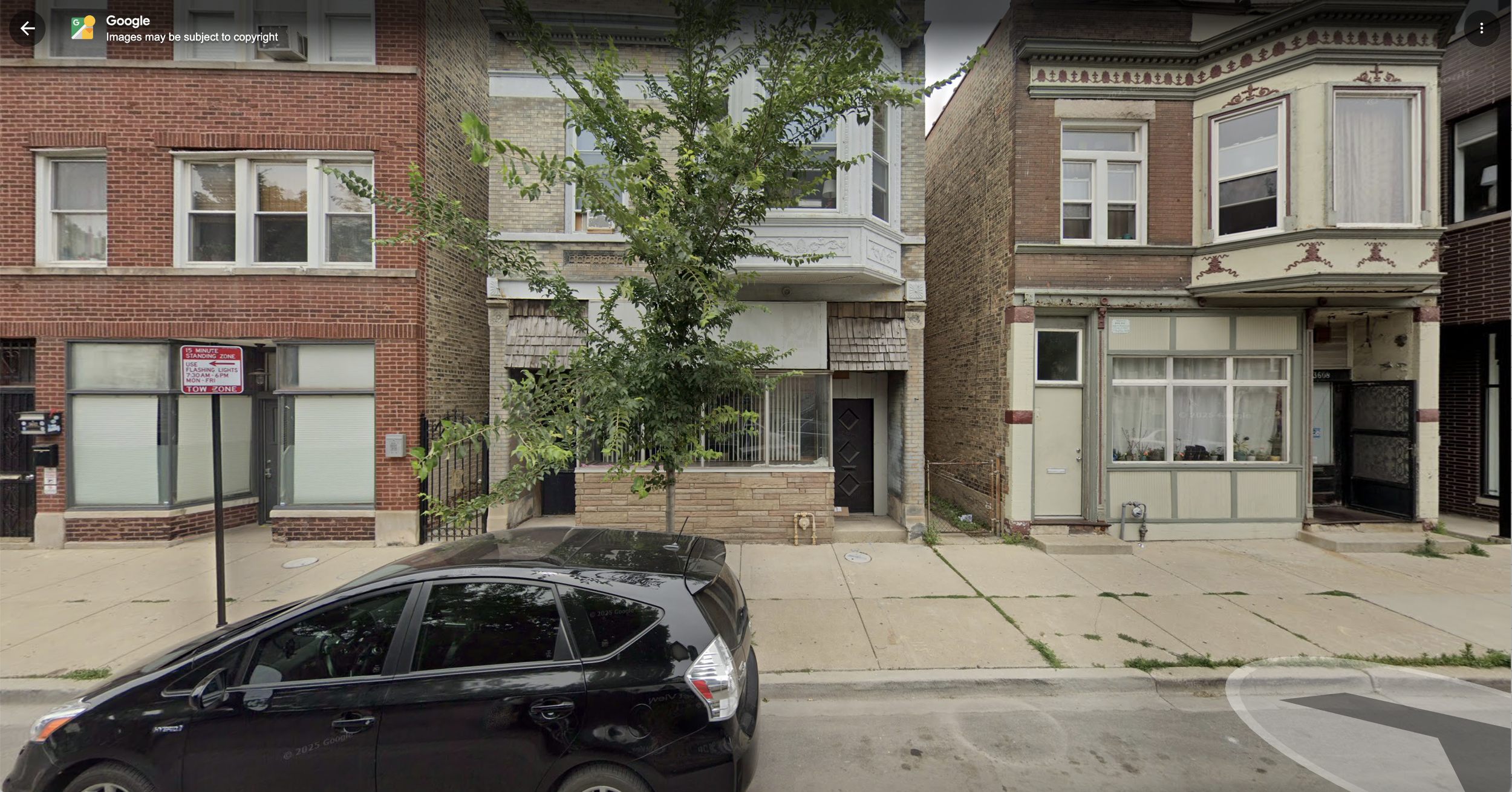
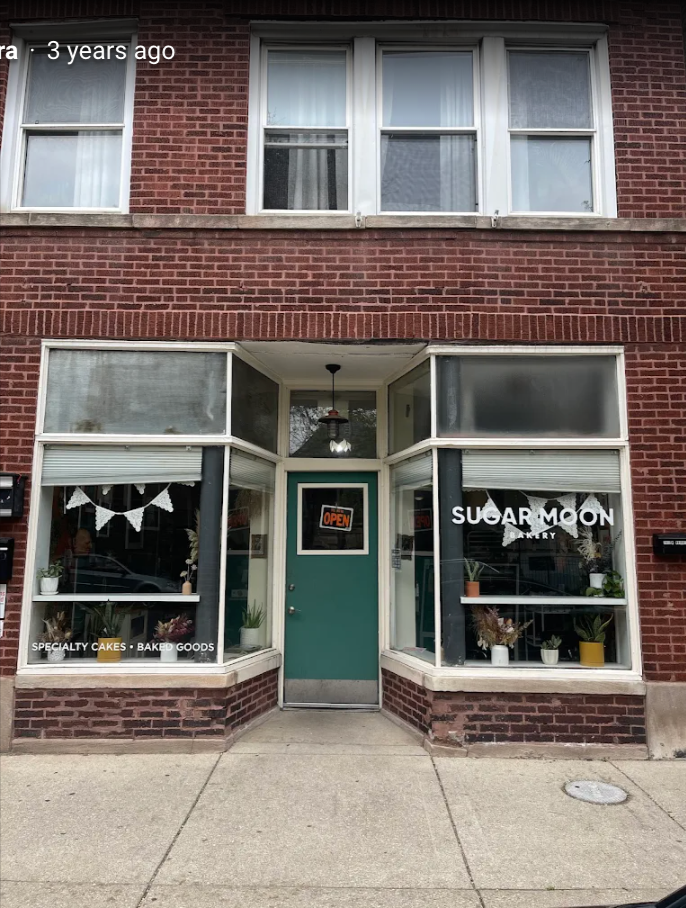
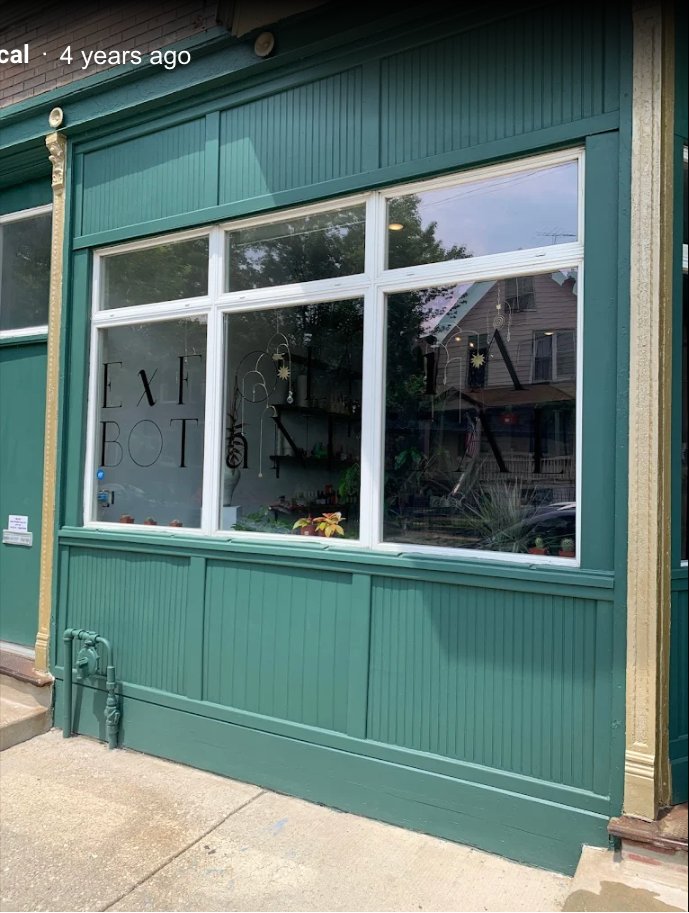
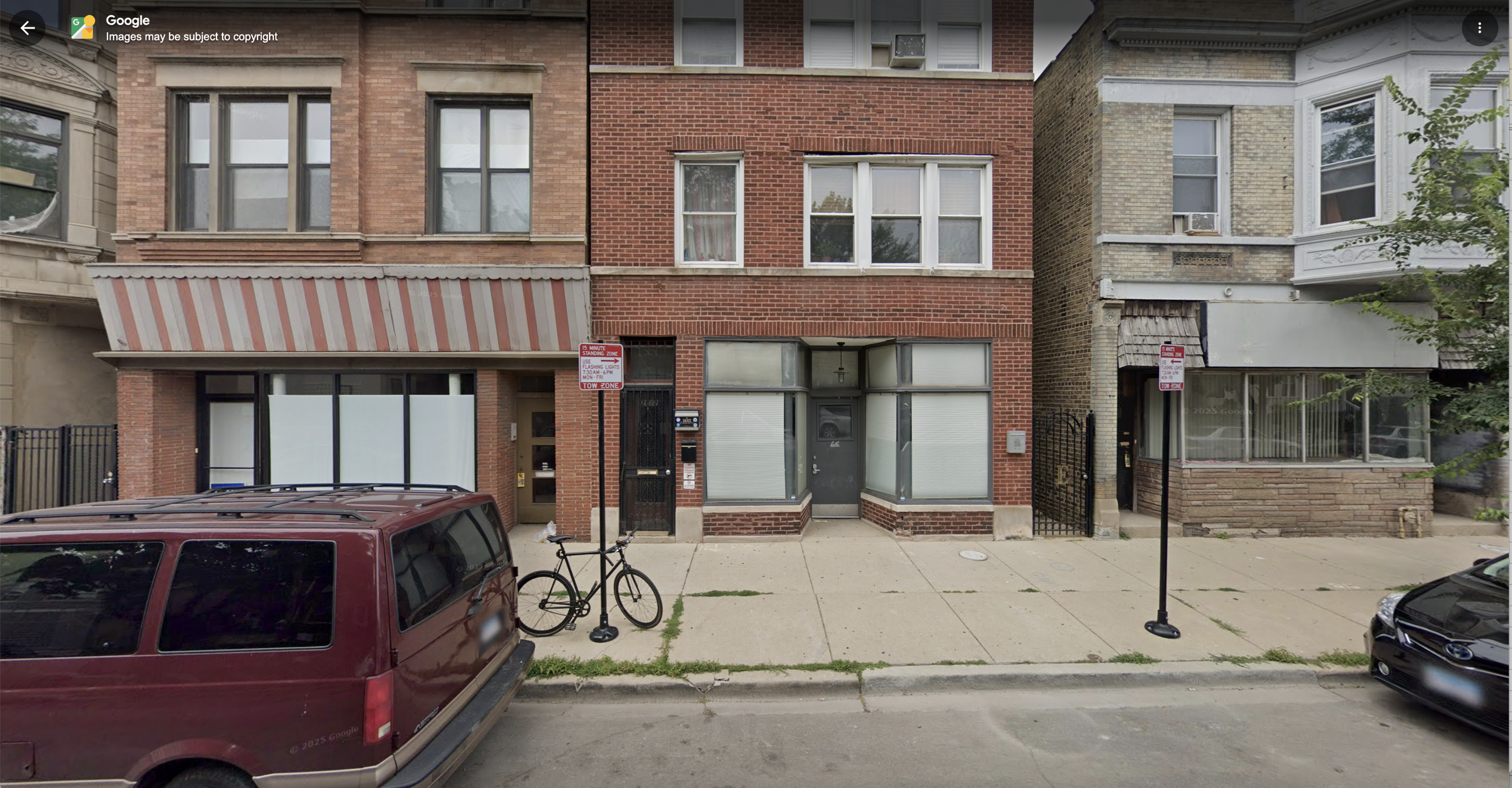
There are a number of coffee shops in Logan Square – but necessary & sufficient, tucked away in a smaller, insular neighborhood, acts as a central hub for the neighborhood of homes directly surrounding it.
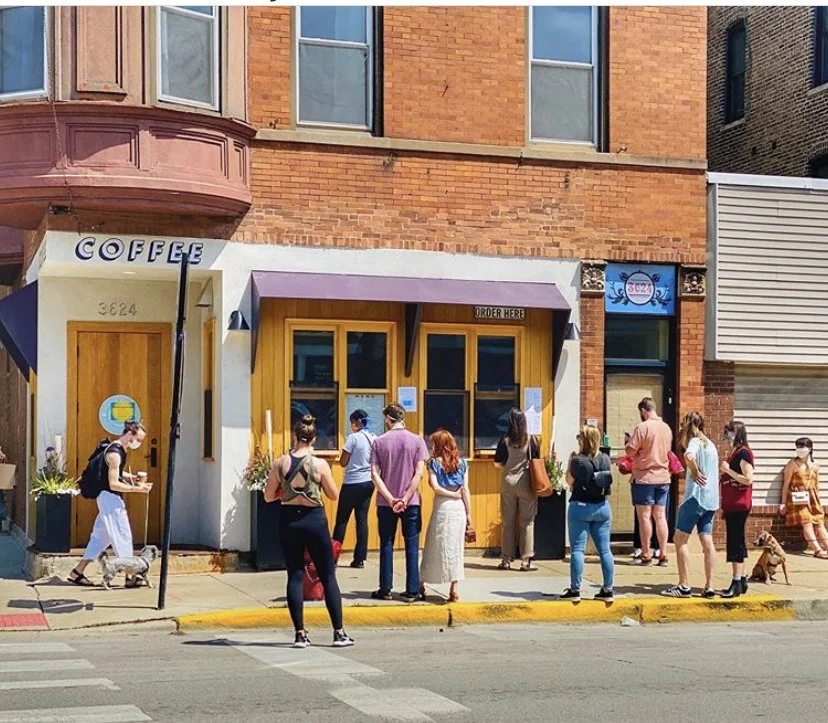
The walk-up window is located at the corner of Wrightwood and Monticello. You’ll find it in the space surrounding two open windows and beneath a black canvas umbrella. Chalkboards leaning against seasonally-flowered planters colorfully indicate the current specials, both food and bev. There’s more chalk sitting out beside a stack of local literary publications, and customers regularly add their own art to the surrounding sidewalk. In the warm weather months, the lines build up to order at the walk-up window: neighbors on a stroll, coffee-lovers making a dedicated excursion, curious shoppers from other excellent local businesses lining the street. Even during the seemingly-neverending Chicago winter, Logan Square locals are dedicated to their neighborhood coffee shop.
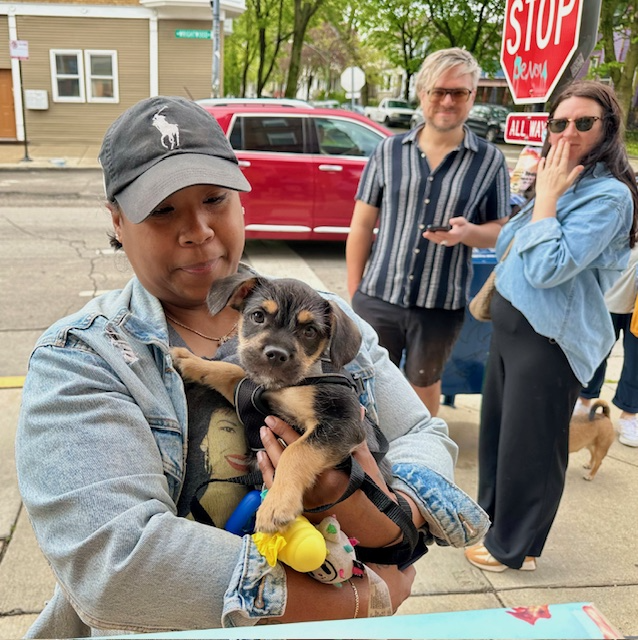
There’s no one type of person in line, no particular age group or clothing style. Many visitors are regulars – baristas have walked alongside customers through new jobs, breakups, and watched children grow from babies to walking, talking, mini-people. And it’s not just the baristas, not even just the humans, making connections. Dogs (and cats) are welcome! Dog bowls and treats for customers have developed in many Logan Square pets a very literal Pavlov effect. I’ve seen strangers bond over their dogs saying hello to one another in much the same way two pedestrians might while passing on the sidewalk, and I’ve seen those oft-fleeting interactions develop into longer conversations, driven by the waiting time between ordering and receiving their drinks. There are no tables to retreat to; no one here is armed against the world with a laptop and a pair of headphones. It’s not that kind of cafe. For the most part, customers at Logan Square are locals looking to get out of the house, enjoy some fresh air, and make a human connection.
It’s as Vrijmoet originally envisioned: an ever-changing snapshot of local community, of conversations struck by accident then sustained by human commonality. Of course, in the post-Covid digital era, spontaneous, in-person gatherings like this have never felt more poignant.These days, necessary operates under two cafes: one in Logan Square, the other in the South Loop neighborhood of Printer’s Row. The Printer’s Row location houses a fully-fledged indoor cafe, which boasts community events such as silent reading nights, art events, and DJ sets. The cafe highlights the work of different artists on a rotating basis. Most recently, the cafe hosted colorful, person-centered photography from Jahse on the walls, alongside a mural from Vrijmoet herself scrawled directly in a dry-erase marker onto the shop windows. It’s a different strategy for building community and encouraging artistic expression, and it acts as a sort of yin to Logan Square’s yang in terms of developing creatively-charged spaces.
“It’s a cafe where creativity is welcome,” says Vrijmoet. “This extends into the food and drinks we offer: experimentation, playing with our food, pushing the boundaries of what we can create for our beverages.”
The spring menu, released in March, is themed around Pyotr Ilyich Tchaikovsky’s iconic ballet, Swan Lake. Among other drinks, there’s the Odette: a floral, nutty, sweet orgeat matcha representing the Queen of the Swan Maidens, the White Swan. The Odile, a richer, earthier black sesame latte, represents Odette’s counterpart, the Black Swan. A strawberry shrub, the Siegfried, rounds out the list with a sweet, refreshing flavor palette. They’re bolder flavor profiles than your average vanilla or lavender, but our equally-bold customer base never hesitates to try out something new.
“Spring invites both more floral and fruity flavors, which frees me to make syrups like the orgeat and the strawberry shrub,” says Franklin Hou, the Printer’s Row barista responsible for the creative development of the spring menu. “I chose to pair the orgeat with a matcha latte because its more delicate flavors shine in matcha, which is less overpowering compared to espresso,” she continues. “Black sesame is a flavor that I grew up enjoying in desserts I loved – like tangyuan – so I had to incorporate it into a coffee. It doesn’t get lost in the espresso, and creates a very aesthetically pleasing drink.”
Hou, a musician herself, said that the drink names came after the flavor development, due to the natural contrast between palettes and the staff’s love of the arts. Several customers have already joyfully called out the ballet-inspired drink names in proud recognition. So, take that, Timothée Chalamet.
“Almost everyone at the cafe is an artist,” Hou says. “I love the fact that we are representing our creative energy in our drinks; it makes them more fun for both us andcustomers, and I plan to continue with interesting themes and naming conventions for seasonal drinks in the future.”
From tattoo artists to actors to musicians to, yes, writers, ask your barista how they spend their time outside of the cafe – chances are, you’ll get to hear about an interesting project, or maybe even receive an invite to an upcoming performance.
Vrijmoet got the ball rolling (the espresso shot pulling? the pourover pouring?), but like any good happening, it takes the right participants to keep it in motion. It takes open hearts, curiosity, and the desire to show up, log off, and participate in something larger.
Get outside, order a coffee, ask a stranger a question. No matter your day job or how you self-identify, I can tell you with some certainty that you, yes, you, are also an artist.
